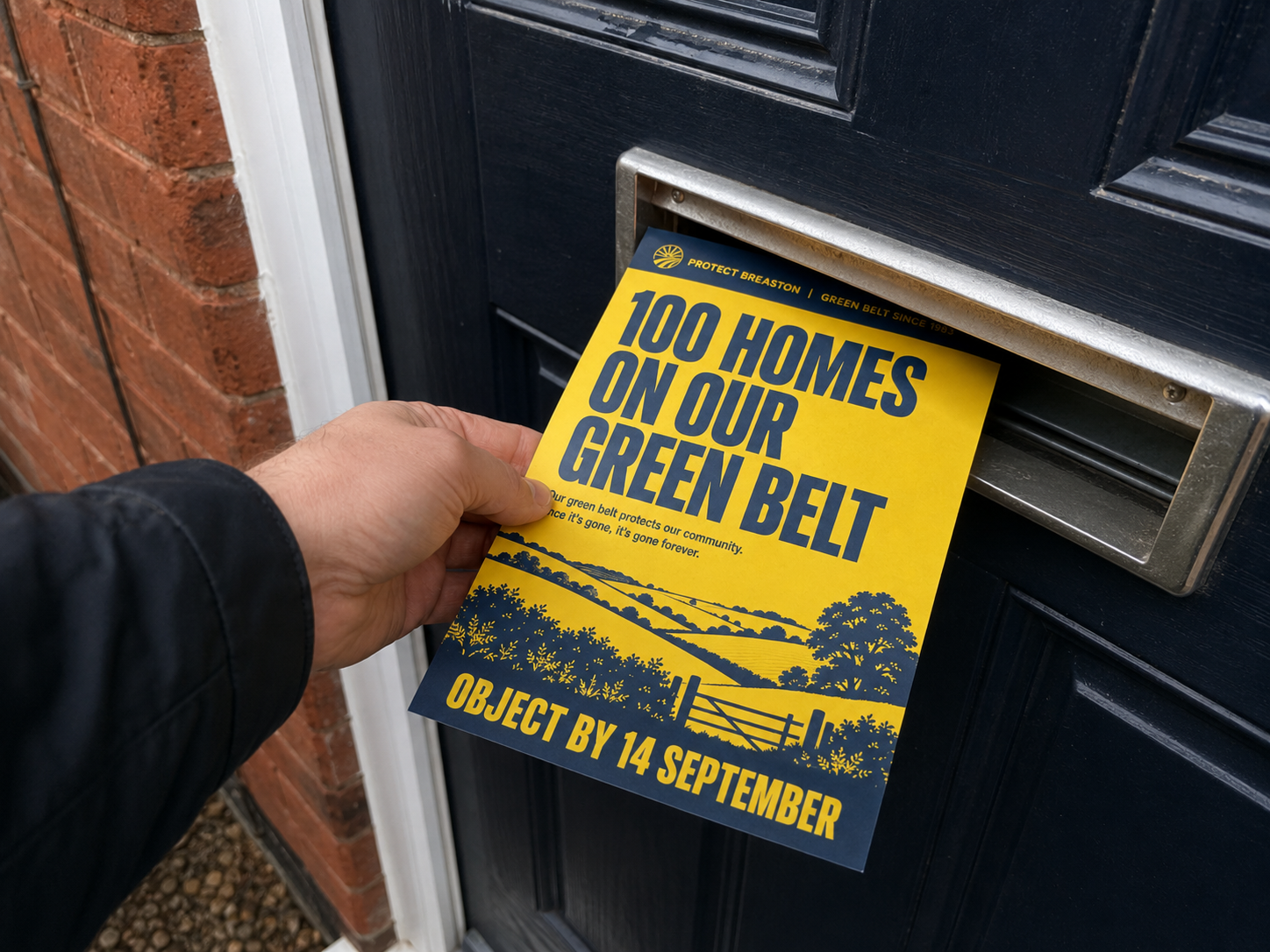
What Size Should a Flyer Be? Start With Where It Needs to Fit
The right flyer size is determined by where it physically needs to fit. Not by what looks good in a design file.
Most flyer waste happens because businesses design first. They build a beautiful A5 layout, order 5,000 copies, and only discover the distribution constraint when the boxes arrive.
The size question is not a design decision. It is a distribution decision. Answer where the flyer goes first, then choose the size that fits.
DL: The Letterbox Standard
DL is 99×210mm. One-third of an A4 sheet.
It fits every UK letterbox without folding. Royal Mail will deliver it as part of door-to-door without surcharge. Pizza places use it. Estate agents use it. Gym promotions use it. There is a reason: it works.
The format forces economy of message. You cannot fit a novel on a DL flyer. You fit an offer, a photo, and contact details. That is usually all a flyer needs.
Print cost at trade printers like Instantprint or Solopress runs £60-90 per 1,000 on 150gsm silk. If you are hand-delivering or letterbox dropping yourself, DL is the size that fits the job.
A6: Handbills and Counter Leaflets
A6 is 105×148mm. Postcard size.
It fits letterboxes. It also fits in a coat pocket, a till-side basket, or a stack on a cafe counter without dominating the space. Hairdressers leave them by the sink. Coffee shops stack them near the till. Tradespeople hand them out after a quote.
The size works for anything someone might keep in a pocket. Appointment reminders. Event invites. Discount vouchers people actually hold onto.
Print cost is slightly less than DL because you get more per sheet. The trade-off is less space for content. If the message is simple, A6 does the job and costs less to produce and post.
A5: Menus and Information Sheets
A5 is 148×210mm. Half an A4 sheet.
Takeaway menus use A5 because people keep them in a kitchen drawer. The size gives enough room for a full food menu, prices, opening hours, and delivery zones. You are handing it to someone who ordered food or leaving a stack at a local business.
The same logic applies to service menus. Beauticians. Cleaners. Anything where the customer needs to reference a price list or options later. A5 holds the detail without cramping it into unreadable text.
Print cost is roughly £80-120 per 1,000 on 150gsm gloss. More paper, higher cost. The format earns its place when the content genuinely needs the space.
A4: Takeaway Menus and Posters
A4 is 210×297mm. Standard office paper size.
You are not posting this through letterboxes. You are handing it out, leaving it on tables, or pinning it to a noticeboard.
Indian and Chinese takeaways print full menus on A4 because customers need to see every dish, every price, every combination deal. The menu lives on a fridge door or in a drawer. Size is not a constraint. Readability is.
A4 also works as a light poster. Community centres. Gyms. Libraries. Anywhere with a pin board or a window. The format sits between a flyer and a proper poster. Close enough to read, large enough to notice.
Print cost is £100-150 per 1,000 on 150gsm. You are paying for paper area. Only use A4 when the content or the location demands it.
What About Folded Flyers?
Folding changes the physics.
A DL flyer folded to 99×99mm becomes a compact square. It still fits letterboxes. It also creates a reveal. Front panel hooks attention. Inside panel delivers the offer. Estate agents do this for new listings. The fold creates structure.
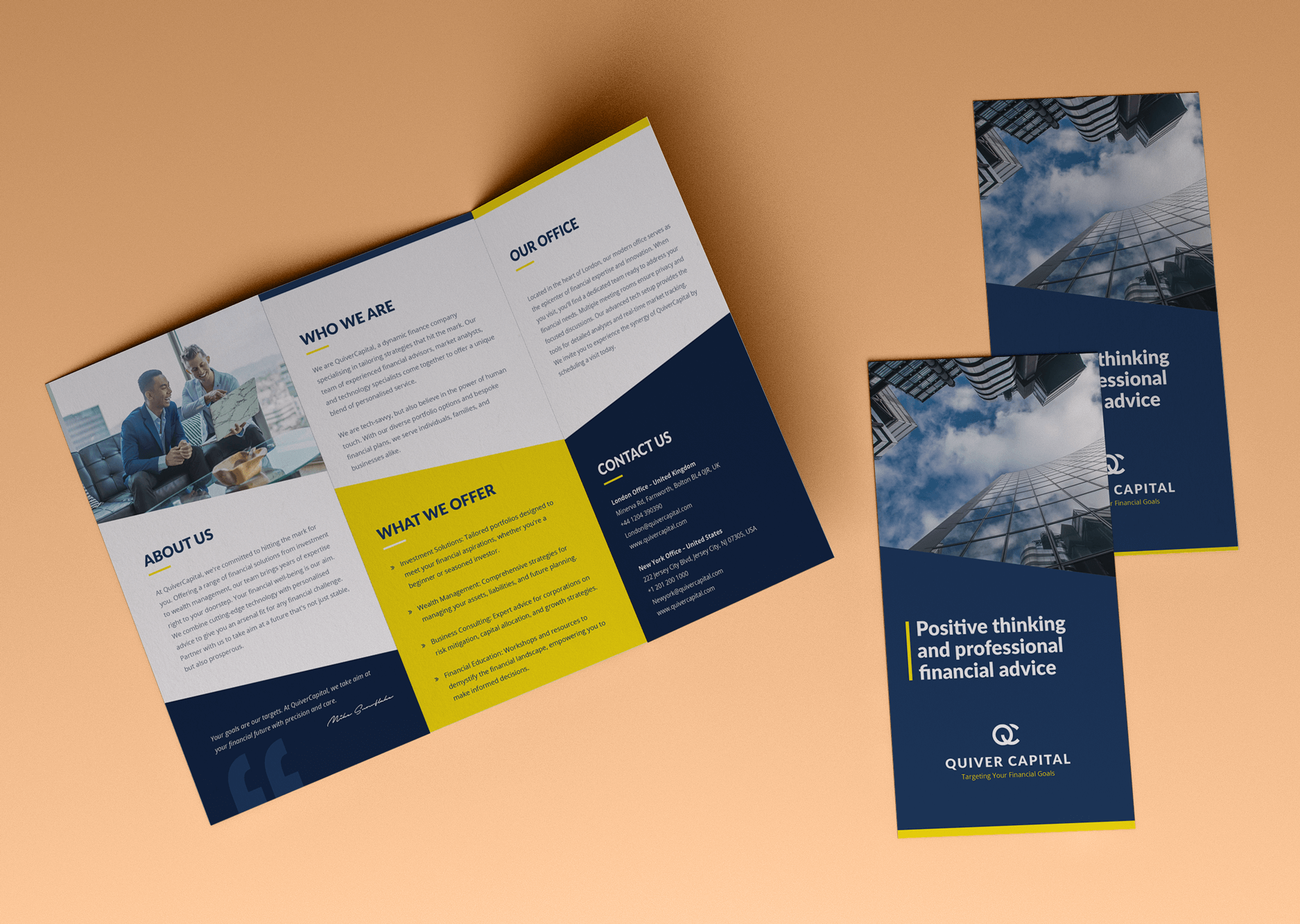
An A4 sheet folded twice becomes DL size. You get six panels of content. Enough for a full service breakdown, pricing tiers, and a map. This is how solicitors and accountants present information without overwhelming the reader.
Folding adds cost. Printlogik charges roughly £20-40 per 1,000 for a single fold, more for complex folds like gatefolds or Z-folds. The cost is worth it when you need the content space but still want letterbox compatibility.
The Real Cost Difference
Print prices per 1,000 units on 150gsm gloss, no folding:
DL: £60-90
A6: £50-80
A5: £80-120
A4: £100-150
The difference between DL and A4 is about £50 per 1,000. Across a 10,000 print run, that is £500. Not trivial for a small business.
But the real cost is not the print bill. It is the wasted units.
What Do Professionals Actually Use?
Walk down any UK high street. Check what hits your doormat.
Pizza delivery: DL, 150gsm gloss, simple offer on the front.
Estate agents: DL or A5 folded, 170gsm silk, property photo dominant.
Gyms and leisure centres: A5, 150gsm gloss, handed out at events or left at reception.
Tradespeople (plumbers, electricians, gardeners): A6, 250gsm uncoated, fits in a pocket after a job.
Indian and Chinese takeaways: A4, 150gsm gloss, full menu, lives on the fridge.
The pattern: format follows distribution. If it goes through a letterbox, it is DL or A6. If it gets handed to someone, it is A5 or A6. If it needs to be kept for reference, it is A5 or A4.
No one uses A3 flyers for door-to-door. No one hands out business-card-sized flyers and expects them to be kept. The standard sizes exist because they match real distribution methods.
What Size Looks Professional?
This is the wrong question, but people ask it.
A flyer looks professional when the design is clean and the print quality is good. Size is irrelevant to perceived quality. A DL flyer on 170gsm silk with a sharp photo and tight copy looks expensive. An A4 flyer on 115gsm uncoated with pixelated images and six different fonts looks cheap.
What matters: paper weight (150gsm minimum for anything going through a letterbox), finish (gloss for photos, uncoated for writeability), and whether the corners arrive intact. A bent or creased flyer reads as low-effort regardless of size.
If you want it to feel premium, go heavier. 250gsm or 300gsm. The flyer has physical presence. People notice. But that only works for hand delivery. Anything over 170gsm starts to struggle through some letterboxes.
The Mistake Most Businesses Make
They design the flyer before they decide how it will be distributed.
A designer creates a landscape A5 layout because it looks modern. The business prints 3,000 copies. Then someone tries to fit it through a letterbox and realises it has to go in at an angle, gets stuck, or arrives crumpled. The campaign fails before anyone reads the offer.
Start with distribution. Decide if it is letterbox drop, hand-to-hand, counter display, or direct mail. The distribution method determines the size. The size determines the layout. Not the other way around.
Which Size Should You Actually Choose?
If you are dropping flyers through letterboxes yourself: DL. It fits. It costs less than A5. It forces you to keep the message tight.
If you are handing them out in person or leaving them on counters: A6. People can pocket it. It does not dominate a counter stack. It still delivers a complete message.
If you need a menu or detailed service list that people will keep: A5. Enough space for structure. Still compact enough to file or pin up.
If you are printing a takeaway menu or something people reference repeatedly: A4. Full content. Readable prices. Lives on a fridge or in a drawer.
The right size is whichever one fits the real situation your flyer will land in. Not the one that looks best in Canva.
You can see flyer sizes, weights, and finishes with full specs and trade pricing. The page shows exactly what each format looks like printed, and what it costs at volume. If you are about to spend money, spend it on the size that actually works for your distribution method.