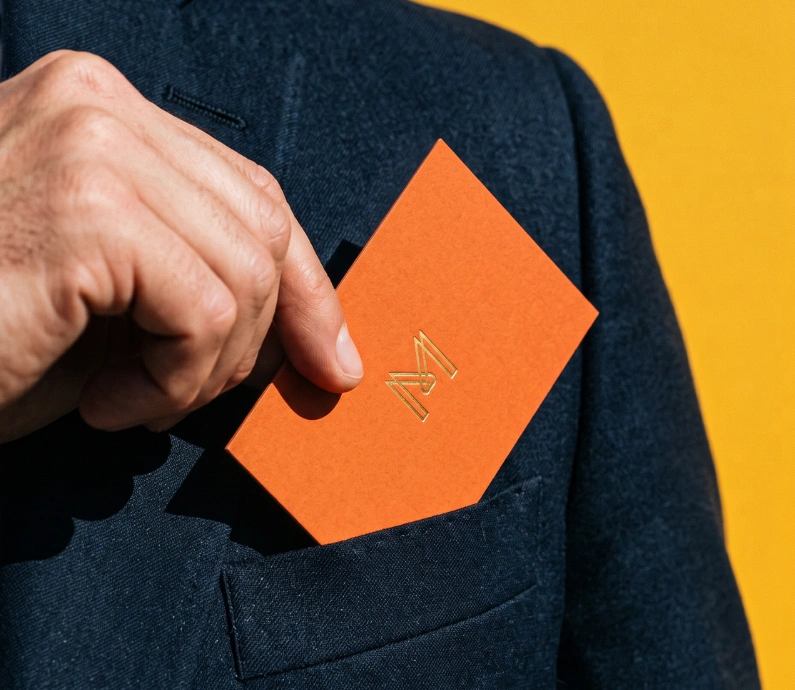

In fact, business cards printed on premium, heavy-weight stock have a 25% higher retention rate among recipients, meaning the physical weight of your card could be the difference between being remembered and being recycled.
Key Takeaways
- GSM (Grams per Square Metre) is the standard measurement for paper weight. A higher GSM means a thicker, denser, more premium-feeling card.
- 350gsm to 400gsm is the industry standard for professional business cards in 2026, offering the right balance of durability and premium feel.
- Finish affects perceived weight. A soft-touch laminate or gloss coating on a 350gsm card can make it feel heavier and more luxurious than its base weight suggests.
- Your industry and audience should guide your choice. Creative industries often go heavier and more tactile, while corporate sectors may prefer a clean, standard weight with a matte finish.
- Sustainability matters in 2026. Recycled and eco-certified stocks are available across multiple weight ranges, so going green does not mean compromising on quality or thickness.
- Cheaper, lower-weight cards (under 300gsm) can actively damage your brand by feeling flimsy and forgettable in someone's hands.
- Printlogik's Knowledge Centre provides detailed guidance on paper weights, finishes, and print specifications to help you make the right call before you order.
What Is GSM and Why Does It Matter for Business Cards?
GSM stands for Grams per Square Metre. It is the universally accepted metric used to measure the density and weight of paper or card stock.
A higher GSM number means a heavier, thicker material. A lower GSM means thinner, lighter paper. When you are choosing a business card, this number has a direct impact on how the card feels, how it performs in a wallet or card holder, and how it represents your brand.
Think about the last time someone handed you a business card that felt almost paper-thin. It probably did not inspire much confidence. Now think about receiving a card that felt solid and substantial in your fingers. That tactile first impression is entirely controlled by GSM.
At Printlogik, we believe that printing smarter starts with understanding your materials. Our business card paper weight guide breaks down exactly what each GSM range means in practical terms, so you are never left guessing.

How to Choose the Best Business Card Paper Weight: The GSM Breakdown
Understanding the full GSM spectrum helps you make a confident, informed decision. Here is a practical breakdown of common weight ranges and what they are best suited for.
Under 300gsm: Avoid for Business Cards
Cards under 300gsm are in the territory of standard printer paper and lightweight leaflets. They bend easily, absorb moisture, and do not hold up in a wallet or card holder for long.
Using this weight for a business card sends an unintended message about your brand. We strongly advise against anything below 300gsm for a card you plan to hand to a client or partner.
300gsm to 340gsm: Entry-Level Professional
This weight range is functional and does not feel embarrassingly flimsy, but it sits at the lower end of what most people would consider professional. It is suitable for high-volume, lower-budget print runs where durability over time is less of a concern.
If you are printing cards for internal use, event handouts, or temporary campaigns, 300gsm to 340gsm can work. For a lasting brand impression, it is worth going heavier.
350gsm to 400gsm: The Professional Standard
This is the range we consistently recommend at Printlogik, and it aligns with what the industry recognises as the professional standard in 2026. Cards in this range feel solid and credible without being uncomfortably thick.
A 350gsm card has the satisfying weight of something intentional. A 400gsm card pushes into premium territory, offering a noticeably substantial feel that holds up exceptionally well over time.
450gsm and Above: Luxury and Speciality
At this weight, you are firmly in luxury card territory. Double-mounted or laminated cards often fall into this GSM bracket. They feel almost rigid in the hand and create an unmistakable premium impression.
These are ideal for high-end professionals, luxury brands, creative directors, and anyone who wants their business card to genuinely stand out as an object worth keeping.
Did You Know?
Business cards printed on premium, heavy-weight stock have a 25% higher retention rate among recipients, because heavier cards feel more like a 'gift' or asset rather than disposable marketing material.
Source: Digital Business Card 2025
How to Choose the Best Business Card Paper Weight for Your Brand Perception
The weight of your card communicates something before anyone reads a single word on it. It is one of those small, tangible details that shapes an overall impression before the conscious mind catches up.
A lightweight card can accidentally suggest that your business cuts corners. A card that feels heavy and well-made suggests the opposite: care, investment, and attention to detail.
Brand perception is not built on big gestures alone. It is built on consistent small decisions, and your business card paper weight is one of those decisions.
Matching Paper Weight to Brand Positioning
Premium and luxury brands should always opt for 400gsm or above. The physical weight of the card becomes part of the brand experience itself.
Mid-market professional businesses, consultants, and service providers are well served by 350gsm to 400gsm. It projects professionalism without feeling excessive.
Creative businesses and agencies often benefit from pairing a heavier stock (400gsm+) with a distinctive finish (soft-touch, spot UV, or uncoated textured stock) to create something genuinely memorable.

How Finish and Coating Affect Your Business Card Paper Weight Choice
When you are figuring out how to choose the best business card paper weight, you cannot consider GSM in isolation. The finish and coating you choose have a significant impact on how the final card actually feels.
A 350gsm card with a soft-touch matte laminate will feel noticeably more premium than a 350gsm card with no coating. The laminate adds a thin layer of material, increasing overall thickness, and the tactile quality of soft-touch creates a luxurious, velvety surface that makes the card feel more substantial.
Matte Finish
Matte finishes absorb light and create a clean, understated look. They tend to feel warm and tactile, and they work beautifully with heavier stocks in the 350gsm to 400gsm range. Writing on a matte-finished card is also easier, which is useful for networking events.
Gloss Finish
Gloss coatings add a reflective shine that makes colours appear more vivid and saturated. Paired with a 350gsm or heavier stock, a gloss-finished card looks sharp and polished. The coating adds a slight rigidity that reinforces the perceived quality.
Soft-Touch Laminate
Soft-touch is one of the most popular premium finishes in 2026 for a good reason. The silky, almost rubberised surface is incredibly tactile and instantly communicates luxury. We recommend pairing it with 400gsm or above for the best result.
Uncoated Stock
Uncoated cards have a natural, raw feel that works particularly well for creative industries, photographers, and makers. At 350gsm or above, an uncoated finish still feels solid and premium. It also tends to print well with earthy or muted colour palettes.
How to Choose the Best Business Card Paper Weight for Your Industry
Different industries have different expectations when it comes to card quality. Choosing the right weight means understanding what your audience will find credible and impressive.
Finance, Legal, and Corporate
In these sectors, a clean, well-weighted card at 350gsm to 400gsm with a matte or soft-touch finish is typically the most effective choice. The priority is professionalism and trustworthiness, not showmanship.
Creative, Design, and Marketing
This is where you have the most creative freedom. Cards at 400gsm or above with distinctive finishes (spot UV, embossing, or textured uncoated stock) perform especially well. Your card is a portfolio piece as much as a contact detail.
Hospitality and Events
Cards in these industries are often distributed in volume, so a 350gsm stock with a gloss or matte finish strikes a smart balance between quality and cost efficiency. They need to feel credible, not necessarily extravagant.
Healthcare and Wellness
Clean, reassuring, and professional is the brief here. A 350gsm matte or soft-touch card with restrained design and a solid weight communicates calm authority and reliability.
Luxury and Fashion
Nothing below 400gsm should be considered. Double-thick cards, letterpress printing on heavy stock, or soft-touch laminated heavyweights all work well. Every detail matters when your brand is positioned around quality.
Sustainability and Business Card Paper Weight in 2026
In 2026, sustainability is not a nice-to-have for UK businesses. It is an expectation. The good news is that choosing sustainable paper stock does not mean sacrificing weight or quality.
Recycled and FSC-certified card stocks are now widely available across the full weight spectrum, including the 350gsm to 400gsm professional range. You do not have to choose between doing the right thing and printing a card that feels premium.
At Printlogik, our Print A Tree initiative means that every order placed with us contributes to environmental restoration. You can print smart and act responsibly at the same time.
Did You Know?
Recycled business cards are retained 25% longer by recipients than standard white cards. The combination of specific paper weight and sustainable material creates a 'sticky' physical connection.
Source: Aura Print
Choosing a recycled 350gsm or 400gsm stock means your card carries a dual benefit: it feels premium in the hand and communicates that your business takes its environmental responsibility seriously. Both of these things positively influence how your brand is perceived.

Common Mistakes When Choosing Business Card Paper Weight
Even experienced marketers and business owners make avoidable mistakes when ordering business cards. Here are the most common ones we see, and how to sidestep them.
Choosing Weight Without Considering Finish
GSM and finish work together. A 400gsm card with a poorly applied or cheap-looking coating can end up looking less impressive than a well-finished 350gsm card. Always consider weight and finish as a package.
Assuming Heavier Always Means Better
The goal is appropriate weight for your brand, not maximum weight for its own sake. A 450gsm double-thick card for a casual freelance service might feel over-engineered. Matching weight to brand positioning matters more than simply going as heavy as possible.
Ordering on Price Alone
Low-price print runs often default to lower GSM stocks to keep costs down. If you are not specifying the GSM when you order, you may receive something lighter than you expected. Always confirm the paper weight before you approve a job.
Not Ordering Physical Samples First
Paper weight is a tactile experience. Reading "350gsm" on a screen does not tell you how it will actually feel. Wherever possible, request samples before committing to a large print run. At Printlogik, we are always happy to help guide you through the options so you know exactly what you are getting.
Ignoring How Cards Will Be Used
If your cards will live in a wallet for months, they need to be durable. 350gsm and above handles wear much better than lighter stocks. If cards are going to be handed out in bulk at events and likely discarded the same day, a lighter weight may be acceptable.
How Printlogik Helps You Choose the Right Business Card Paper Weight
At Printlogik, we do not just take your order and run it through the press. We work as your print partner, helping you make informed decisions so the final result genuinely represents your brand.
Our Knowledge Centre is built specifically to move the relationship beyond transactional. We want you to understand what you are ordering and why, so every print job works harder for your business.
We are a Derby-based business, but we serve UK brands of all sizes. Our founder Bradley Leivars and the wider Printlogik team are directly involved in helping clients navigate choices like paper weight, finish, and print specification, because we know these details make a real difference to how your brand lands in the world.
Our "Print Smarter" philosophy is built on the idea that small businesses deserve print quality that lets them compete with much larger players. The right business card paper weight is part of that story.

Conclusion: How to Choose the Best Business Card Paper Weight Confidently
Knowing how to choose the best business card paper weight comes down to understanding GSM, respecting your brand positioning, and considering finish as part of the overall package. The professional standard in 2026 sits firmly between 350gsm and 400gsm, with heavier options available for luxury and premium applications.
A card that feels right in the hand communicates quality before a word is read. It is one of the lowest-cost, highest-impact improvements you can make to how your brand presents itself in person.
If you are not sure where to start, visit our Printlogik homepage or drop us a message. We are here to make the process straightforward, from paper weight to print finish and everything in between.
Frequently Asked Questions
What is the best paper weight for business cards in 2026?
The best business card paper weight in 2026 is widely considered to be between 350gsm and 400gsm. This range offers a professional, durable feel that holds up in wallets and card holders while making a strong brand impression without feeling excessive.
What does GSM mean on a business card?
GSM stands for Grams per Square Metre and is the standard measurement for paper density and weight. A higher GSM number means a thicker, heavier card, while a lower number indicates a lighter, thinner material.
Is 350gsm good for business cards?
Yes, 350gsm is an excellent choice for business cards and sits at the lower end of the professional standard range. It feels solid and credible in the hand, especially when paired with a quality finish such as matte laminate or soft-touch coating.
What is the difference between 350gsm and 400gsm business cards?
A 400gsm card is noticeably thicker and more substantial than a 350gsm card. Both are professional quality, but 400gsm pushes into premium territory and is particularly effective for high-end brands or industries where a luxury feel is important.
Does business card paper weight affect how long someone keeps your card?
Yes, research consistently shows that heavier, more premium-feeling cards have higher retention rates among recipients. A card that feels like a quality object is much less likely to be discarded immediately than one that feels thin and disposable.
Can I get eco-friendly business cards at a professional paper weight?
Absolutely. Recycled and FSC-certified card stocks are available at 350gsm and above, so you do not have to compromise on quality or weight to make a sustainable choice. In fact, recycled cards often retain a distinctive tactile quality that can make them even more memorable.
How does the finish affect the feel of a business card compared to the paper weight?
Finish and coating work together with paper weight to create the overall tactile impression. A soft-touch laminate, for example, can make a 350gsm card feel noticeably heavier and more luxurious than its base weight alone would suggest. Always consider both GSM and finish when choosing business card paper weight.