This practical guide walks you through everything you need to know, from choosing the right approach to getting print-ready files that work across every surface you'll ever need.
Key Takeaways
- What is logo design for small businesses? It's the process of creating a visual identity, including a logo, colour palette, and typography, that represents your business consistently across print, digital, and physical spaces.
- How much does a small business logo cost in 2026? Professional logo design packages typically start from £349, which includes initial concepts, a final logo suite, and full ownership of your files.
- What files do you need for a small business logo? You need source files (AI or EPS), high-resolution PNGs, and print-ready PDFs. Social media-ready assets are also essential in 2026.
- Should a small business use a designer or a DIY tool? For businesses serious about their brand, a professional designer produces print-first, real-world-ready results that DIY tools simply cannot match.
- What's included in a good logo design package? Look for 2 to 3 initial concepts, a complete brand identity system, colour guidance, typography choices, and full usage rights. Our logo design service for startups and small businesses covers all of this from a single clear package.
- How long does small business logo design take? A professional process typically delivers within 5 to 7 business days from briefing to final files.
- Do I own my logo after it's designed? Yes, if you use a reputable designer. You should receive full source files and 100% ownership with no usage restrictions.
Why Logo Design for Small Businesses Matters More Than Ever
In 2026, customers make decisions fast. Your logo is often the first thing someone sees on a van, a business card, a sign, or a social profile, and first impressions form in under a second.
A logo is not just a pretty mark. It's the foundation of every printed item, every uniform, every outdoor sign, and every digital touchpoint your business ever uses.
Getting your logo right from the start means you spend less time (and money) fixing inconsistencies later, whether that's a logo that doesn't reproduce well at small sizes or colours that look wrong on different print materials.
Done properly, a strong logo gives your business instant credibility. Done poorly, it undermines everything else you're trying to build.
Logo Design for Small Businesses: Understanding What You Actually Need
One of the biggest mistakes small business owners make is treating a logo as just one file. In reality, a working logo for a real business needs to be a system.
Here's what a complete logo suite for a small business should include:
- A primary logo in full colour, for use on white or light backgrounds
- A reversed logo in white, for use on dark or coloured backgrounds
- A simplified icon or monogram for social media profiles, stamps, and small-scale use
- Typography guidance so your brand fonts stay consistent across all materials
- A defined colour palette with exact colour codes for print (CMYK) and digital (RGB/HEX)
- Source files in vector format so your logo scales perfectly at any size
- Social media-ready assets cropped and sized for the platforms you use
Without all of these, you'll hit problems the moment you try to print your logo on anything beyond a basic business card.

The Print-First Approach to Small Business Logo Design
Most online logo tools are built for screens. That's a problem if you're planning to use your logo on signage, uniforms, vehicle graphics, letterheads, or any printed material.
Print-first logo design means every decision, from colour choice to font weight to spacing, is made with real-world usage in mind.
A logo that looks sharp on your phone screen can look muddy or unprofessional when printed at A4 on a flyer or scaled up for an outdoor board. The difference comes down to how the file is built and whether the designer understands print production.

Our professional design services are built around exactly this approach. We produce logos that are tested for print before anything else, because that's where most small businesses will actually use them.
When your logo works in print, it works everywhere.
Real Examples: Logo Design for Small Businesses Done Right
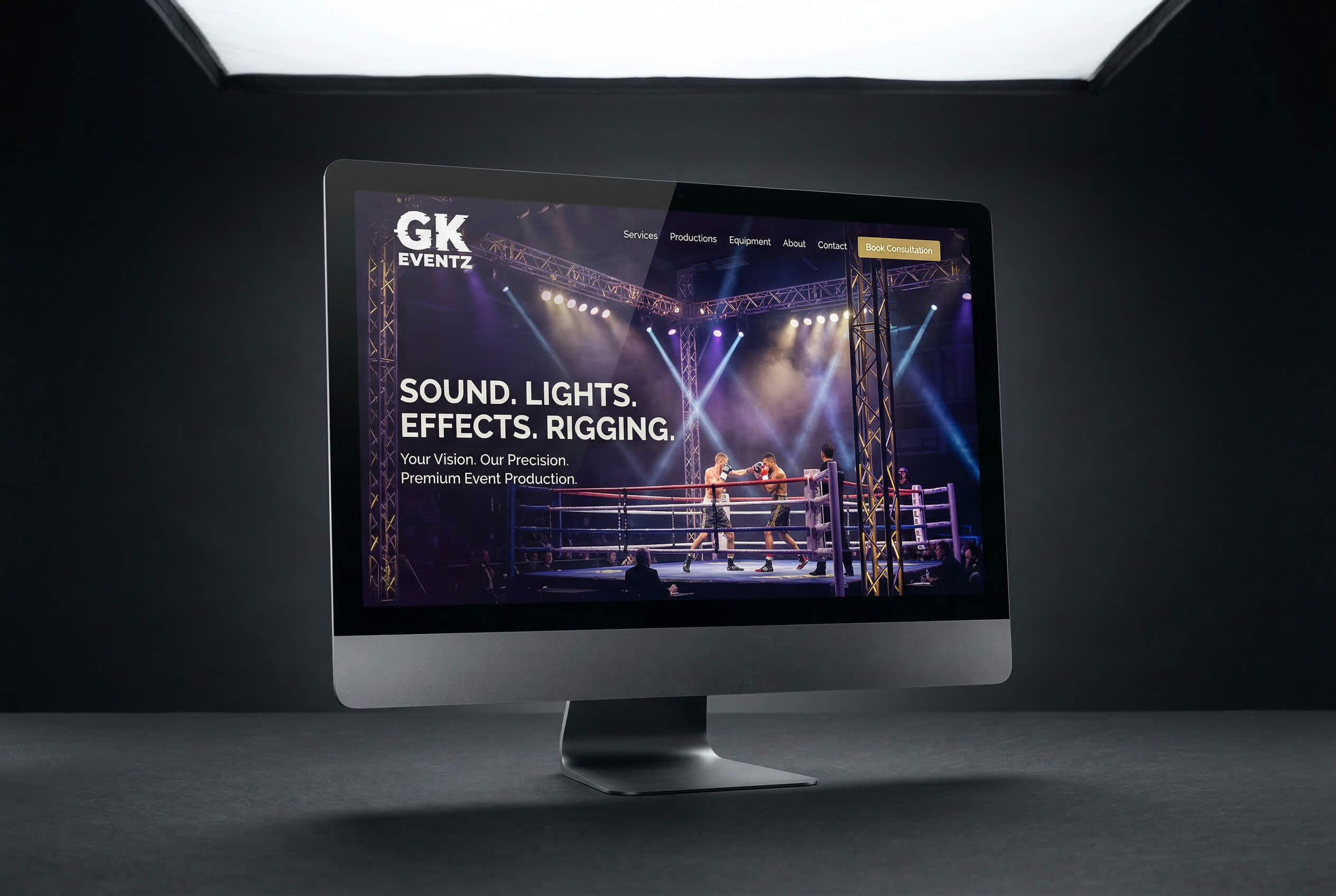
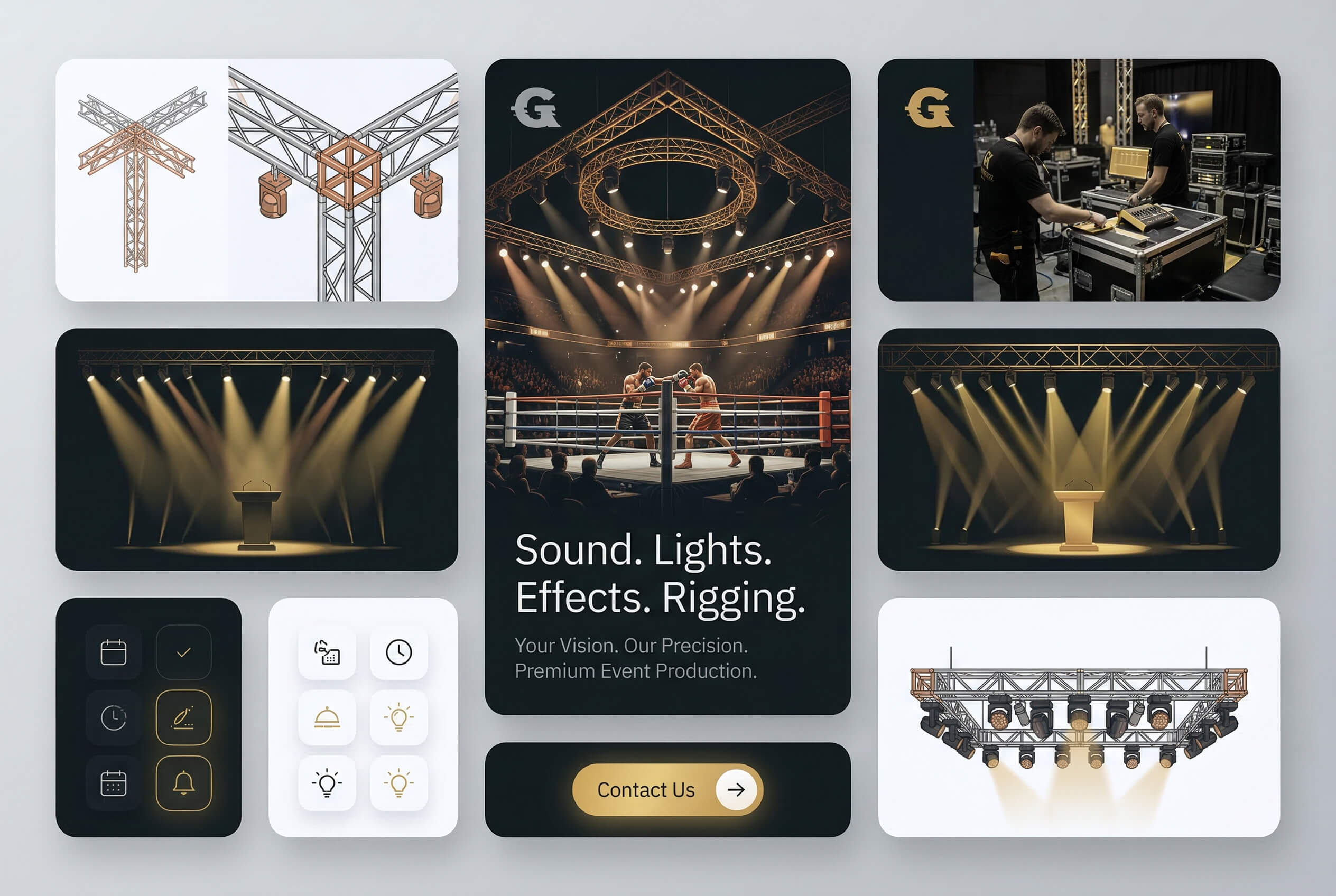
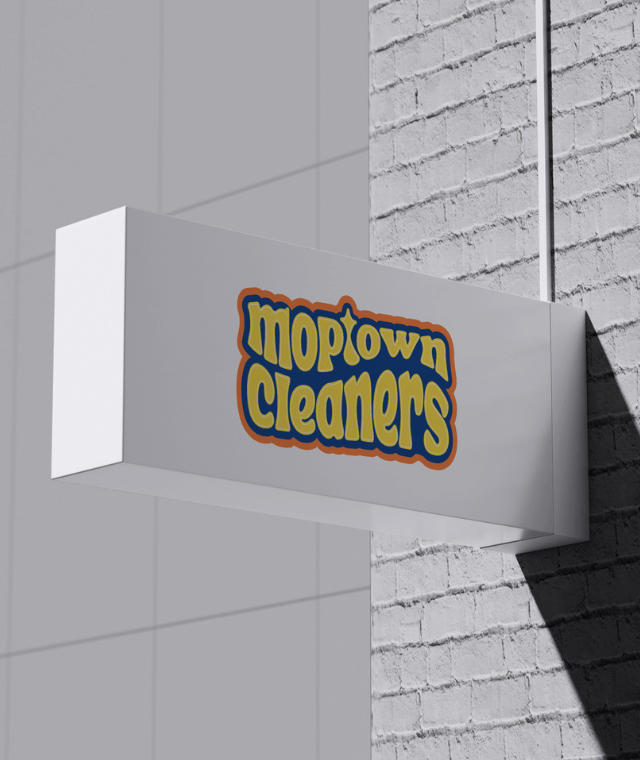
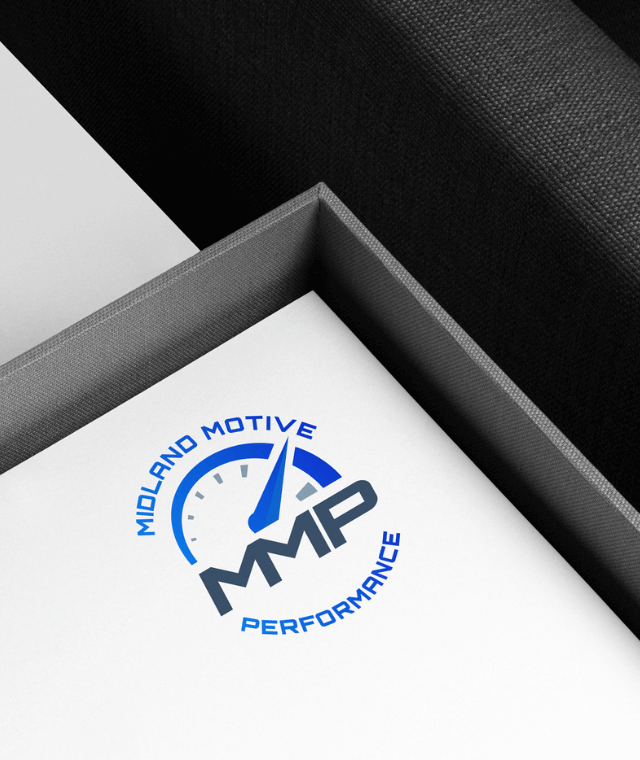
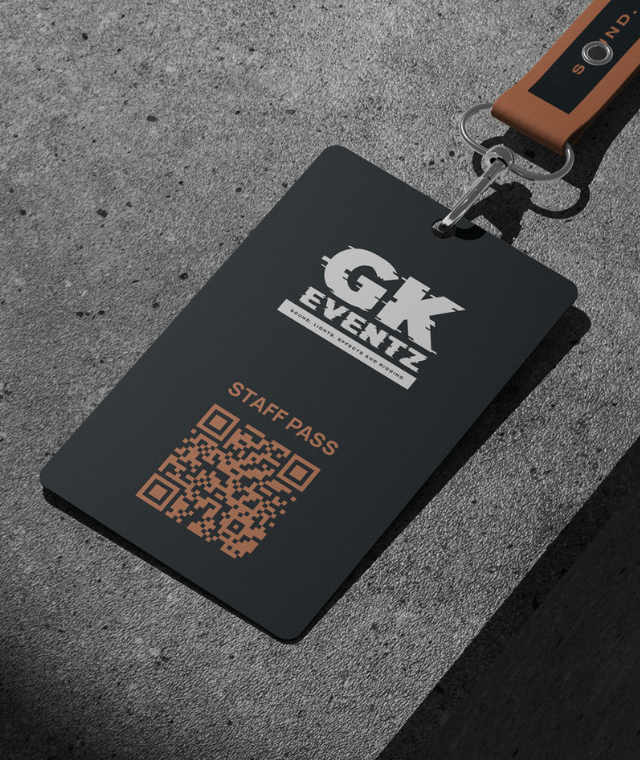
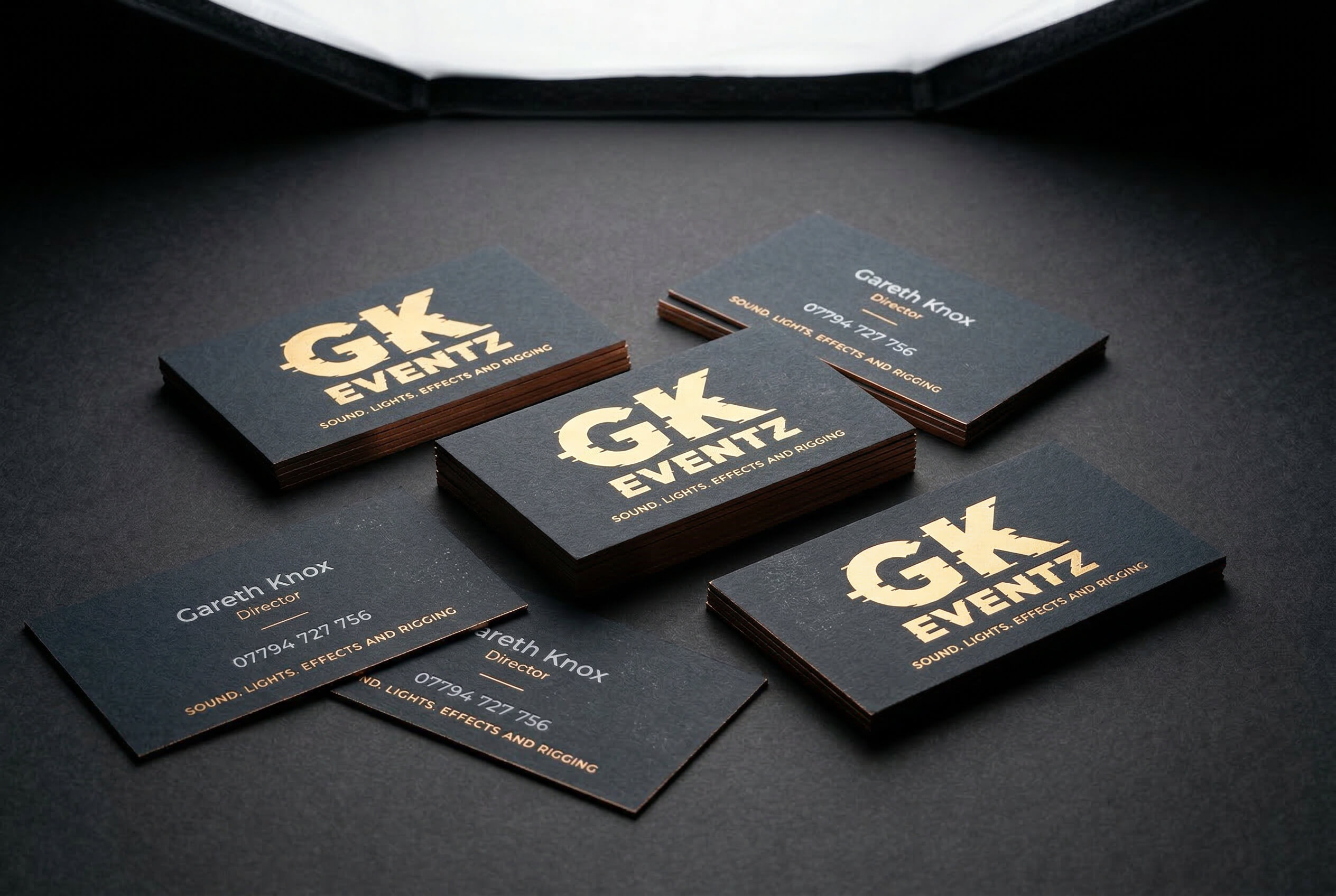
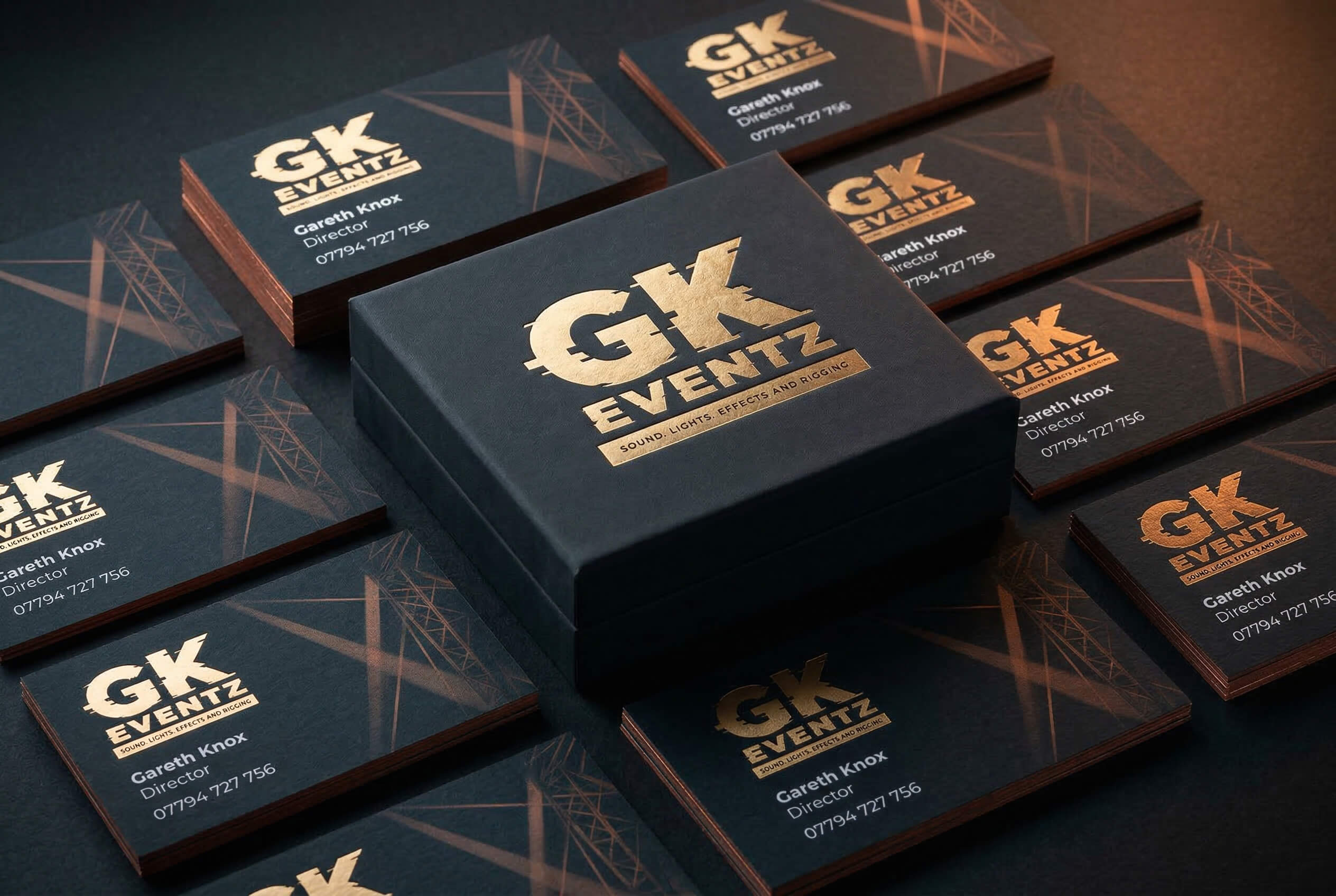
The best way to understand what quality logo design looks like is to see it in action. Here are some examples of real small business logos we've produced, each one designed from the ground up for a specific trade or sector.


Each of these logos was designed with the specific business in mind, from the trades sector through to events and automotive. And every single one was built to work in print from day one.
That's not an accident. It's the result of a clear, structured process.
A Simple, Clear Process for Logo Design for Small Businesses
One of the most frustrating things about getting a logo designed is not knowing what happens next. The process feels vague, revisions drag on, and you're not sure what you'll actually receive at the end.
We do things differently. Our process is simple, checked, and done properly, every time.
- Brief and discovery: We talk to you about your business, your market, and how you plan to use your logo. Print, signage, uniforms, digital? We need to know everything before we start designing.
- Initial concepts: You receive 2 to 3 distinct logo concepts, each with a different creative direction. This gives you genuine choices without turning the project into an endless revision cycle.
- Refinement and sign-off: Once you've chosen a direction, we refine the details until the logo is exactly right. No ambiguity, no rushed decisions.
- Final delivery: You receive a complete logo suite, source files, brand guidance, and social media-ready assets. Everything is yours, with full usage rights and no strings attached.
The whole process runs to a 5 to 7 day turnaround from brief to delivery. Fast turnaround. Zero compromise on quality.
What to Look for in a Logo Design Package for Your Small Business
Not all logo design packages are equal. Here's what to check before you commit to any designer or agency.
- Source files included: You must receive the original editable files (usually Adobe Illustrator .AI or .EPS format). Without these, you can't properly resize or adapt your logo for future use.
- Full usage rights: Some designers retain copyright over their work. Always confirm that you receive 100% ownership of your logo on delivery.
- Print-ready outputs: Ask specifically whether the files are set up for commercial printing. CMYK colour profiles and correctly set bleed and trim marks matter more than most people realise.
- Brand guidance included: Even a simple one-page document showing your exact colours, fonts, and usage rules will save you time and money every time you produce new materials.
- Social media assets: A square icon version, a circular crop, and correctly sized header images are standard requirements in 2026.

Our logo design package, starting from £349, includes every one of these elements as standard. First impressions you'll be proud to hand over.
Logo Design for Small Businesses: Colour, Typography, and Brand Identity Guidance
A logo is only as strong as the brand system it sits within. Colour and typography are not afterthoughts. They're the framework that holds your entire visual identity together.
Colour choice should be intentional and informed by your sector, your audience, and the materials you'll print on. Bright yellows behave differently on uncoated stock versus coated. Dark navy needs different treatment on screen versus embroidery.

Typography should be consistent and practical. Using the same fonts across your logo, business cards, website, and signage creates immediate visual cohesion. It also reduces the time and cost of producing new materials.
Every logo we produce comes with clear colour direction and typography guidance, so you're never guessing what to use when you need to produce something new.
From Logo to Print: Putting Your Brand Identity to Work
Once your logo is finalised, the next step is applying it across your printed materials. This is where a print-first logo design really pays off.
Business cards, flyers, postcards, outdoor signs, and branded merchandise all require your logo in specific formats and at specific sizes. If your logo wasn't built correctly from the start, every print job becomes a problem to solve.
Our business card printing service is a natural next step once your logo is complete. And if you're thinking about outdoor visibility, our outdoor signs and pavement boards are a straightforward way to put your new brand in front of people on the street.
Every order we print goes through a human artwork check before it reaches the press. A real person reviews your files, confirms they're set up correctly, and flags anything that could cause a problem. That's not standard practice in online print. For us, it's just how we work.
You can find practical guidance on print specifications in our Knowledge Centre, including advice on paper weights, file setup, and making the most of your brand assets in print.
Logo Design Trends for Small Businesses in 2026
Trends in logo design move slower than trends in fashion or social media, and that's a good thing. A logo should look current without becoming dated in two years.
In 2026, the strongest small business logos share a few common qualities:
- Simplicity over complexity: Clean, readable marks that work at any size perform better across both digital and print applications.
- Authentic colour palettes: Muted tones, earthy neutrals, and bold single-colour treatments are replacing the neon gradients that dominated earlier in the decade.
- Crafted typography: Custom or semi-custom lettering signals quality and differentiation in a way that generic font choices simply don't.
- Versatility as a design requirement: Logos are expected to work on everything from a 16x16px favicon to a full-size vehicle wrap. That range demands thoughtful construction.
- Brand systems over standalone logos: Businesses in 2026 are investing in complete identity systems rather than single marks, because consistency across touchpoints is what builds recognition.
These are not passing fads. They reflect how people actually interact with brands across a growing number of physical and digital surfaces.

Sustainable Logo Design and Branding for Small Businesses
More small businesses in 2026 want their brand to reflect their values, including their commitment to sustainability. This goes beyond choosing recycled paper for business cards.
We built the Print A Tree Project to make every print order we process contribute to real environmental impact. In partnership with Ecologi and verified against the Verified Carbon Standard and Gold Standard, we plant trees and offset carbon on behalf of our customers.
When your logo is designed and printed with us, the environmental impact of that process is being actively reduced. That's something you can genuinely communicate to your customers.
Sustainable, smarter print for UK businesses. It's not just a line. It's how we operate.
How Much Does Logo Design for Small Businesses Cost in 2026?
Budget is always a real consideration for small businesses. Here's a straightforward breakdown of what different levels of investment typically deliver.
- Free or very low-cost DIY tools (£0 to £30): You get a generic mark using template-based tools. Files are often low resolution, colours are not properly specified for print, and you may not own full rights to the output.
- Freelance designers via low-cost platforms (£50 to £200): Quality varies enormously. You might get something usable, but there's no guarantee of print-ready files, proper brand guidance, or a designer who understands your sector.
- Professional logo design packages (£349 and above): This is where you receive a complete, properly built brand identity. Multiple concepts, a refined final logo, full source files, brand guidance, and real usage rights. This is the investment level that actually serves a growing business.
Our logo design package starts from £349 and includes everything a small business genuinely needs, designed with print in mind and delivered within 5 to 7 days.
The cheapest option is rarely the most cost-effective one. When you have to redo a logo because the original files were unusable, the real cost is always higher than simply doing it properly the first time.
Common Mistakes in Small Business Logo Design (and How to Avoid Them)
After working with hundreds of small businesses across the UK, we've seen the same problems come up again and again. Here's what to watch out for.
- Choosing raster files over vector: A JPEG or PNG logo is fixed at a specific resolution. Enlarge it beyond that and it becomes blurry. Always insist on vector source files.
- Not checking print colour accuracy: Screen colours (RGB) look different when printed (CMYK). If your designer hasn't checked both, your brand colour might print completely differently to what you expect.
- Skipping brand guidelines: Without a reference document for your colours and fonts, every time a new person produces something for your business, consistency suffers.
- Designing only for digital: If your logo relies on fine gradients, very thin strokes, or tiny text, it may become unreadable on printed materials, embroidered uniforms, or engraved products.
- Not planning for scale: Your logo needs to work at the size of a pen as well as the size of a shopfront. Test it at both extremes before sign-off.
- Rushing the brief: The more clearly you articulate your business, your audience, and how you'll use your logo, the better the design will be. Time spent on the brief saves time later.

Logo Design for Specific Small Business Sectors
The best logo for a plastering contractor looks very different from the best logo for an event management company. Sector matters, and so does the specific audience you're trying to reach.
Trades businesses (builders, plumbers, electricians, plasterers) typically need logos that communicate trust, reliability, and professionalism. Bold, simple marks with strong readability work best, because they'll appear on vans, hi-vis gear, and site signage.
Hospitality and food businesses need logos that work well on packaging, menus, and outdoor signage simultaneously. Colour warmth and approachability matter more here than technical precision.
Professional services businesses (accountants, consultants, legal firms) benefit from logos that signal credibility and calm confidence. Clean typography and restrained colour palettes do the heavy lifting.
Whatever your sector, the underlying requirements for a good small business logo remain the same: simple, scalable, print-ready, and backed by proper source files.
Conclusion: Logo Design for Small Businesses That Actually Works
A practical guide to logo design for small businesses comes down to one core principle: invest in a logo that is built properly, delivered with the files you need, and designed with your real-world usage in mind.
Generic tools and cheap shortcuts create problems that cost more to fix than the original saving was worth. A professional logo design process, done in 5 to 7 days, starting from £349, and built print-first from the ground up, gives your business a foundation you can actually use across every material and every surface you'll ever need.
We've designed logos for tradespeople, event companies, cleaners, automotive businesses, and dozens of other small businesses across the UK. The process is simple, checked, and done properly, every time.
Explore our full logo design service for startups and small businesses and see what's included. Or, if you're ready to put your new brand to work in print, our professional design and print services cover everything from brand identity to finished, delivered materials.
First impressions you'll be proud to hand over. That's what we're here to deliver.
Frequently Asked Questions
How much should a small business spend on logo design in 2026?
A professional logo design package for a small business in 2026 typically starts from £349 and includes source files, brand guidance, and full usage rights. Cheaper options often result in unusable files, which means paying again to have the work redone properly.
What files do I need when I get my logo designed?
You need vector source files (AI or EPS), high-resolution PNG files with transparent backgrounds, print-ready PDFs, and social media-ready versions in correct dimensions. Without vector files, your logo design for small businesses is limited in how it can be used.
Can I design my own logo as a small business owner?
DIY tools exist, but they produce generic results that are rarely print-ready and often come with usage restrictions. For any small business that intends to print its logo on physical materials, a professional logo design is a better investment in the long run.
How long does small business logo design take?
A professional logo design process for a small business typically takes 5 to 7 business days from the initial brief to final delivery. This includes the concept stage, revisions, and production of a complete logo suite with all required files.
Do I own my logo after a designer creates it?
Only if your agreement explicitly states that ownership transfers to you on delivery. Always confirm in writing that you receive full usage rights and that no ongoing licencing fees apply. Our logo design packages include 100% ownership with no conditions.
What makes a good logo for a small business in 2026?
A good small business logo in 2026 is simple, scalable, print-ready, and built as a complete brand system with defined colours and typography. It should work equally well on a business card, a vehicle graphic, and a social media profile without losing clarity or impact.
Is it worth getting a professional logo designer for a small business?
Yes, particularly if you plan to use your logo in print, on signage, or across branded uniforms and merchandise. A professional logo design for small businesses ensures your brand works correctly across all physical and digital applications from day one, saving you significant cost and frustration later.