
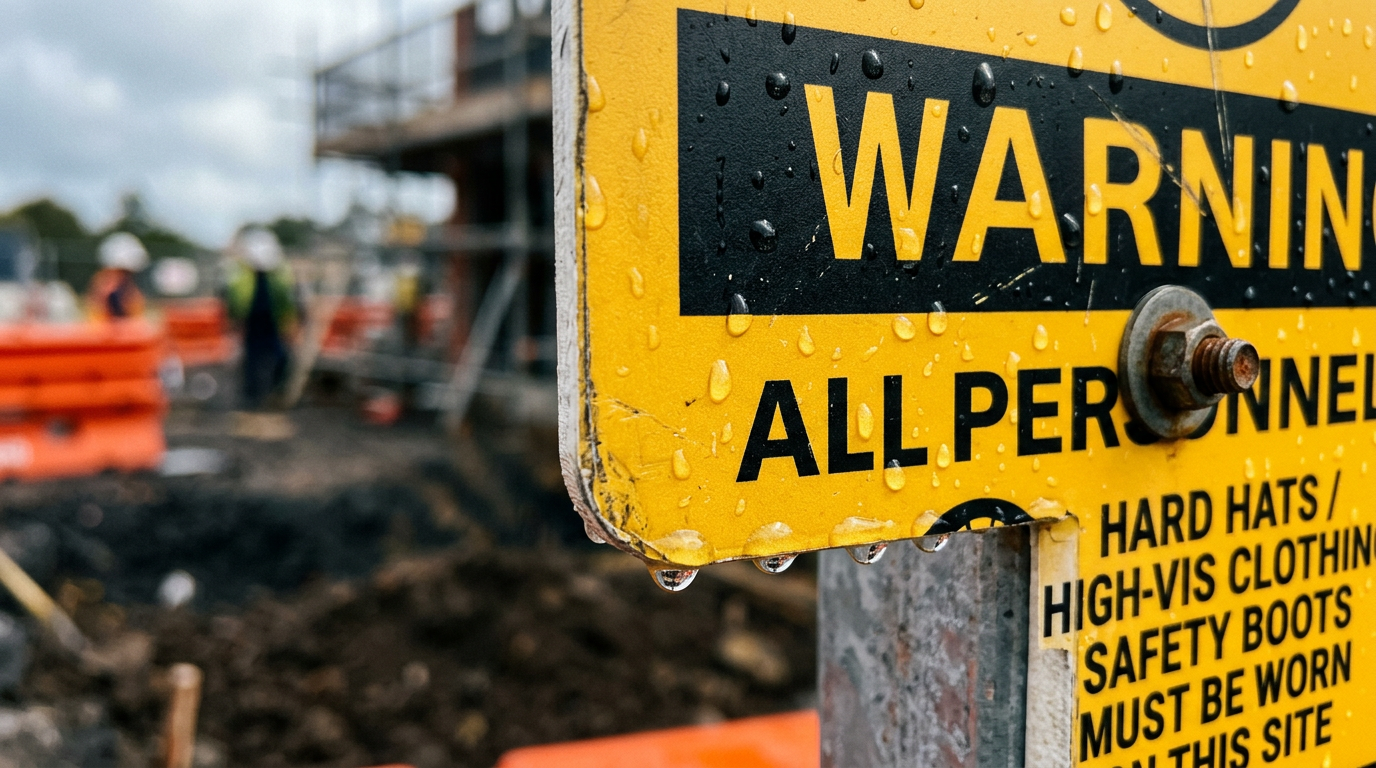
A fading hazard sign isn't a sign problem. It's a safety problem dressed up as a sign problem.
Most construction sites end up with bits of signage that should have done their job and didn't. The roller banner that blew over in week two. The A-board with text bleached to nothing by August. The hoarding banner whose fixings let go in the first proper wind. By the time someone notices, the cost isn't the replacement, it's the gap in time when a warning that should have been there wasn't.
This is what to spec for each scenario on a UK site, and why the cheap version of construction signage almost always works out more expensive.
Why "outdoor-rated" is doing a lot of work
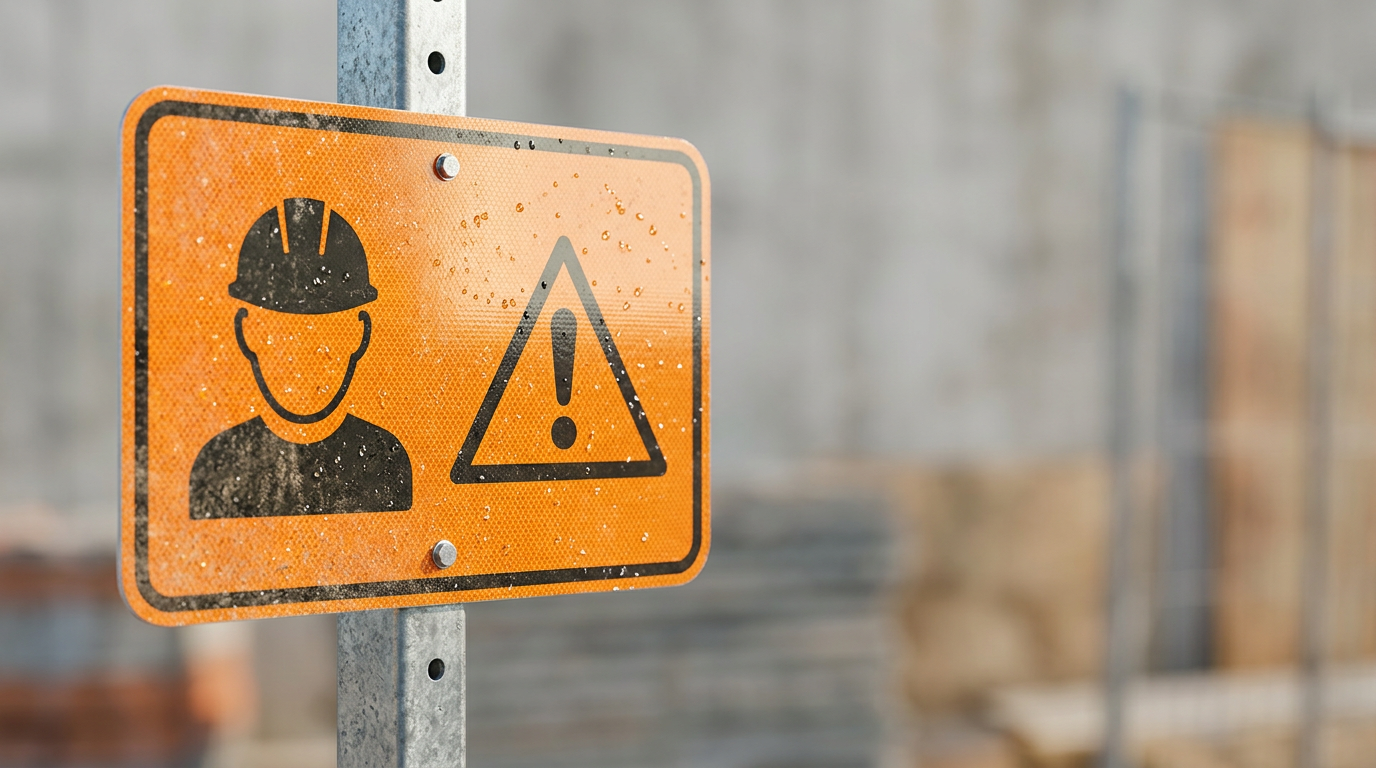
The phrase "weather-resistant" gets sprayed across product listings the way "premium" gets sprayed across business cards. It either means something specific or it means nothing.
What actually matters is the combination of three things: the substrate (the material itself), the print (inks and finishes), and the anchoring system (how it stays where it needs to be). Get one of these wrong and the other two don't matter. A UV-stable vinyl print on a flimsy frame is useless. A robust aluminium composite board secured with cable ties from a household pack is useless. The whole assembly fails together.
When we talk about what to spec below, we're talking about all three of those things, not just the printed bit.
Site entrance: forecourt stands
The entrance is where the rules first get communicated. PPE requirements, site rules, visitor instructions, contractor sign-in. This is signage that needs to be permanent for the project duration and resistant to the daily knocks of vehicles, weather, and people.
Forecourt stands are built for this. Weighted base, rigid front-facing display, designed to stay vertical in wind without being bolted to anything. The graphic can be updated when site rules change without replacing the frame.
For permanent rules displays directly on hoarding, rigid board signage mounted with proper fixings holds up better than vinyl banners stretched across fencing.
Temporary hazard messaging: A-boards and outdoor posters
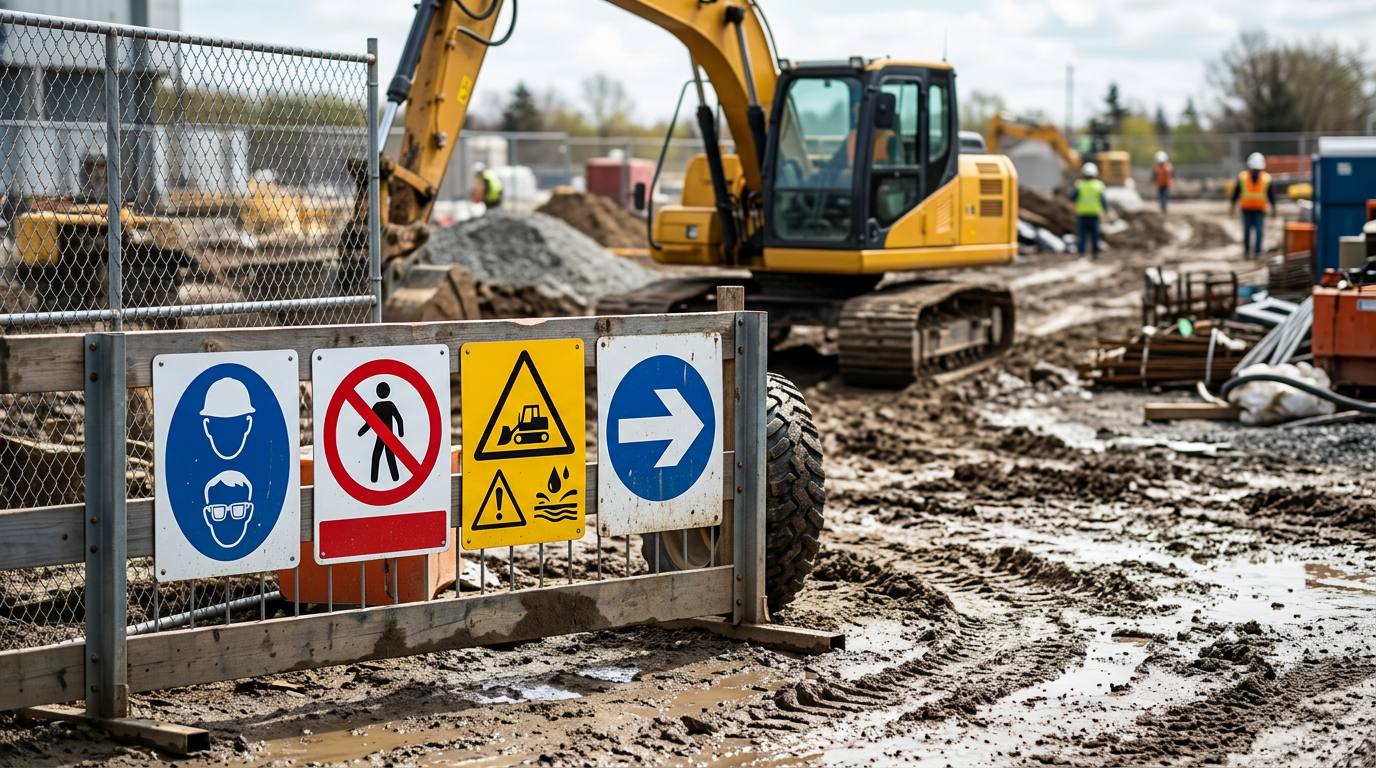
Hazard messaging is the bit that changes most often. Different phase of the works, different walking route, different exclusion zone. Whatever's deployed needs to be moveable, replaceable, and rigid enough to hold up outdoors.
Outdoor A-boards are the standard answer because they're portable, heavy enough not to wander off in a breeze, and the graphic can be swapped without replacing the frame. They sit well near walkways, deliveries, and zones where the hazard changes day to day.
For faster, lower-cost updates (toolbox talk topics, weekly safety messages, phase changes), outdoor posters printed on weather-resistant stock mount inside protective frames or directly to hoarding. They're the cheapest way to keep messaging current without ordering new signage every week.
What lets cheap A-boards and posters down is usually the print, not the frame. A laminated outdoor-grade print lasts the duration of a typical project. A standard ink-jet insert fades to illegibility in months.
Long-distance visibility: flags
On larger sites, signage needs to be seen from a distance, often by approaching delivery drivers or visiting contractors who haven't been there before. This is what flags are for.
Crest flags have a curved profile that keeps tension in the fabric even in breezy conditions, so the graphic stays legible rather than flapping into a blur. Feather flags are taller and narrower, which works for directional signage and entrance marking.
Both depend entirely on the base and pole system. A flag without proper anchoring is a flag on the ground by Wednesday. Flag accessories is the boring but essential other half of the order.

Site entrance visibility: outdoor roller banners
For high-visibility messaging at entry points, outdoor-rated roller banners do work that internal-grade roller banners can't.
The outdoor water-base roller banner has a water-fillable base that gives it the weight to stay upright in conditions that would topple an indoor banner inside an hour. The graphic itself is on stock that handles UV and rain rather than the lighter print stocks used for trade shows.
The key spec to confirm before ordering is "outdoor-rated" rather than just "outdoor-suitable." Marketing language matters less than the materials list.
Fixings: the bit everyone underspecs
Most signage failures on construction sites are actually fixings failures.
Cable ties from a household multipack don't hold a banner to scaffolding in a January storm. Standard rope-and-eyelet on a banner not designed for it tears at the corners. The right banner fixings and accessories, proper heavy-duty eyelets, weather-rated ties, reinforced corners on the banner itself, are what stand between your signage and an insurance form.
When ordering, the question to ask is: what's holding this thing up in 60mph wind at 3am on a Sunday when nobody's looking? If the answer's "a couple of zip-ties," that's the failure point.
Vehicle and equipment markings: magnetic signs
Equipment moves between zones, sometimes daily. Hard-mounted signage on machinery isn't practical. Magnetic vinyl is.
Magnetic vinyl signs attach and reattach without damaging surfaces, which means a single piece of signage can travel with a vehicle or piece of plant as its role on site changes. They're rated for outdoor use and hold up to the kind of impacts and washes that destroy adhesive vinyls.
Indoor briefings: pop-up displays
Not all construction signage sits outside. Site offices and briefing zones need durable, repeatable visual material for shift briefings, toolbox talks, and inductions.
A traditional pop-up display gives you a large, portable graphic surface for site maps, emergency procedures, and risk awareness. It packs down between sites, which matters if your operation moves around.
What this looks like when you spec it properly
A real construction site signage order isn't one product. It's a system.
Forecourt stand at the entrance. A-boards and outdoor posters for moveable hazard messaging. Flags for distance visibility. Outdoor roller banner for entry-point messaging. Magnetic vinyl for the vehicles. Proper fixings for everything that needs to be tied to something. Indoor pop-up for the briefing area.
The total cost is roughly the cost of replacing the cheap version twice. The difference is the bit between those two replacements when you didn't have a sign saying what it should have said.

What we do at Printlogik
We supply construction signage to UK sites because we got tired of seeing the cheap version of this fail in the same predictable ways. Materials specified for outdoor service life rather than indoor display. Print laminated where lamination earns its place. Fixings sold properly rather than as an afterthought.
If you've got a site coming up and want to spec this before the first delivery arrives, drop us a message. We'll walk through what the site actually needs based on what's on it, not based on a tick-list.
Cheap signage on a building site isn't cheap. It's just slow expensive.