
Most marketing advice for small businesses gets the order wrong.
You get told you need a brand identity, a social media presence, an SEO strategy, a content plan, a paid ad funnel, and an email sequence before you've made your tenth sale. Then you get pointed at a list of tools to buy.
The honest version is shorter and less interesting to anyone selling you tools: your first hundred customers come from doing the unglamorous work of telling people about your business directly. After that, marketing starts compounding. Before that, it mostly doesn't.
Here's the order I'd put it in if I were starting again from scratch.
1. Direct outreach beats inbound for the first hundred customers
This is the bit no one wants to hear because it doesn't scale and it doesn't sound impressive.
The fastest path to your first hundred customers, in almost every small business, is calling, emailing, or walking into a hundred places and telling them what you do. Not a content strategy. Not a viral post. Not a clever ad. A list of people you could realistically serve, and the discipline to actually contact them.
Inbound marketing (SEO, content, social) works, but on a six to twelve month timescale, and the early stages produce nothing visible. If you've got revenue pressure, and most small businesses do, the maths doesn't work. Outreach produces results in weeks. Build the inbound stuff in the background. Pay the bills with outreach in the foreground.
2. Be visible to the people who can already see you
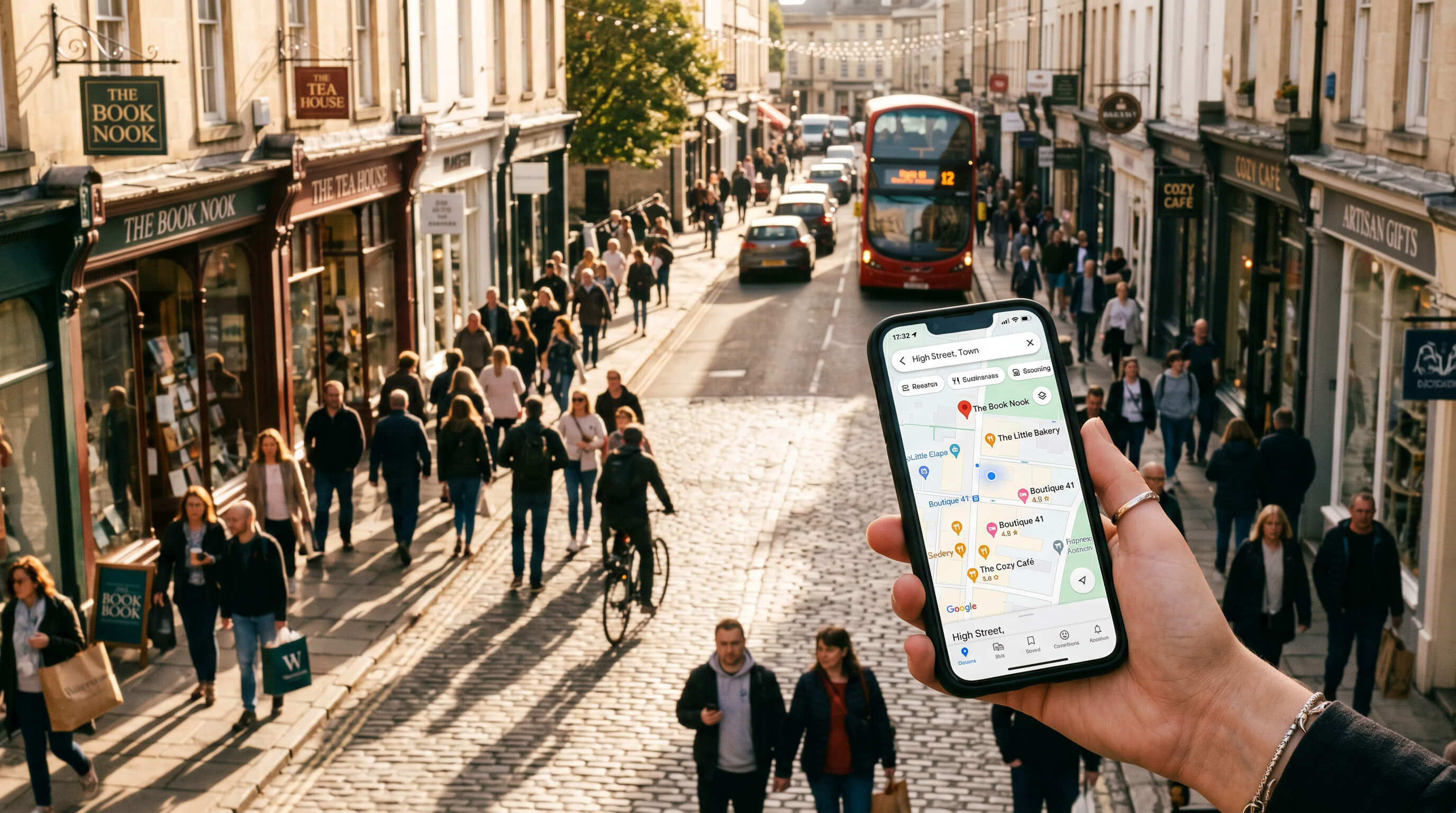
Once you've got customers coming from outreach, the next layer is local visibility. Not internet-wide visibility, just visibility to the people physically near your business.
This is where print and signage earn their place. A shop with no visible signage is invisible to passers-by. A market stall without clear branding loses the people who walked past once and tried to find you again. A trade business with no branded vehicle is harder to remember than the one with their phone number on the side.
For most small businesses, the practical list is:
- A clearly branded entrance, vehicle, or stall.
- Business cards that don't feel like an afterthought.
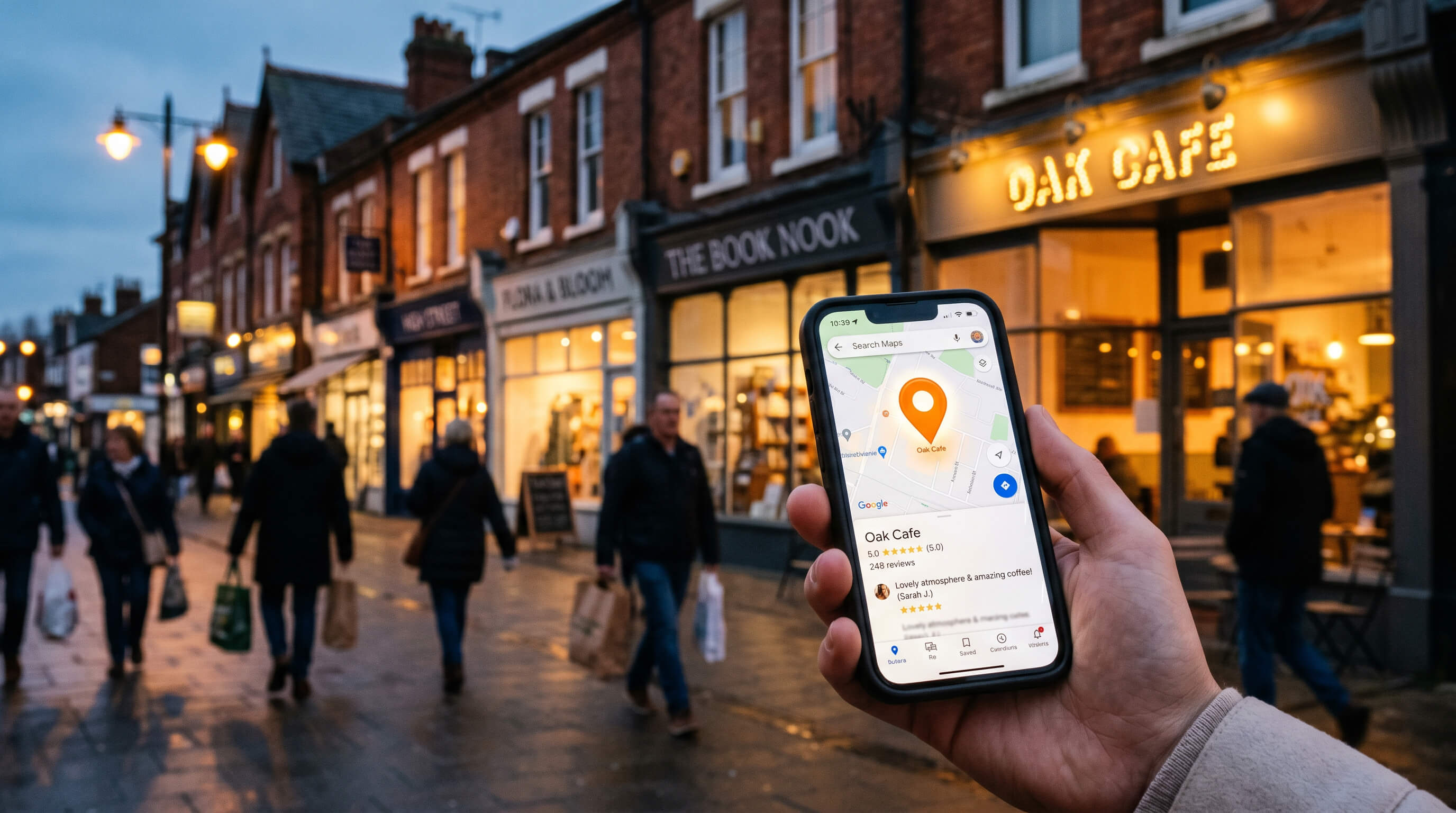
- A Google Business Profile that's actually filled in.
- Word of mouth, which you accelerate by asking for it explicitly.
Notice none of those are "a social media strategy." Local visibility is the cheapest, highest-leverage thing a small business can invest in, and most don't bother.

3. Make it absurdly easy to buy from you
The friction between "interested" and "purchased" is where most small businesses leak customers.
Slow response times. Forms that ask too much. Contact pages without a phone number. Quote requests that take three days to come back. Every bit of friction loses you a percentage of the people who were ready to spend money.
The benchmark to aim for, especially for service businesses: a real human response within an hour during working hours. Not an automated email. A reply that proves you saw the message and you're working on it. Compared to your competitors, this alone wins business.
4. Pick one channel and actually do it properly
Most small businesses try four channels badly. The ones that pull ahead pick one channel and do it well for long enough to actually see results.
If you're physical and local, the channel is probably some combination of local visibility (signage, Google Business Profile, foot traffic) and word of mouth. If you're online and remote, it might be content marketing or a specific social platform. If you're B2B, it's almost certainly direct outreach plus referrals.
The mistake is spreading thin. Six months of consistent effort on one channel beats two months each on three channels, every time. You don't have to be on every platform. You have to be on one that works for your customers.

5. When you do invest in printed materials, here's where it counts
I run a print business, so I won't pretend print is irrelevant. It isn't. But it matters in specific ways, not in general "every business needs flyers" ways.
The print spend that earns its keep:
- Business cards that match the business. A card that feels cheap costs you credibility every time you hand one out. A card that feels considered does the opposite. We've written about paper weight specifically if you want the spec detail.
- Local signage and displays where you have physical presence. Roller banners for events, A-boards for shopfronts, vehicle livery for trades. These pay back fast when foot traffic or local visibility is part of your model.
- Branded packaging if your business has an unboxing or gifting moment. This is retention spend, not acquisition.
The print spend that often doesn't earn its keep:
- Flyer drops with no targeting (low conversion, mostly recycled).
- Generic giveaways without a clear purpose.
- "Brand awareness" print runs ordered before there's a brand to be aware of.
If you're going to spend on print, spend on the things that signal quality at the moment of customer contact, not on volume distribution to people who haven't asked.

6. Brand presentation matters more for retention than acquisition
This one's a bit counterintuitive.
Most marketing advice frames branding as the thing that wins you customers. In small business reality, it's mostly the thing that keeps them. A new prospect walks in with low expectations; your brand needs to clear a low bar to win the first sale. A returning customer or referral source compares you to themselves; your brand needs to be good enough that they're happy to associate with you.
This is why "looks like a small business" is actually fine when you're starting. What's not fine is "looks like a small business that doesn't care." There's a difference between a clean, simple, well-considered identity on a tight budget and a Vistaprint scramble.
7. The compounding rule
The thing that makes marketing work for small businesses is consistency over a period of years, not creativity in a single campaign.
A clear message, applied consistently across signage, materials, conversation, follow-up, packaging, social presence, and word of mouth, builds up. Each individual touchpoint is small. The compound effect over eighteen months is what separates the businesses that grow from the ones that stay flat.
The boring version of this advice: pick a message, repeat it everywhere, don't get distracted by trends, and stay at it longer than feels reasonable.

What we do at Printlogik
We didn't build Printlogik because small businesses needed more print options. We built it because most of the print being sold to them was being sold without thought. Generic templates, light stocks, no advice, no follow-through.
The version we wanted to exist was a partner that asks what you're actually trying to do before quoting you a price. Cards that match the business. Signage that handles the conditions it'll actually face. Stock and finish decisions made with the spec in mind, not the cheapest line in the listing.
If you're starting out and want a sensible second opinion before committing to a print run, drop us a message. We'd rather you spend less and get something good than spend more and get something forgettable.
That's not marketing advice. It's how we'd want to be sold to.