Key Takeaways
- Lead with one clear offer and match it to the audience in front of your flyer.
- Use a conversion-focused layout with a strong headline, benefits-first copy, and one primary call to action.
- Choose finishes and paper that support readability (especially for daylight, indoor lighting, and quick scanning).
- Make your CTA scannable in 2026, for example with a QR code or a short URL, printed sharply at the right size.
- Prepare print-ready artwork correctly (bleed, safe margins, and template alignment) to avoid conversion-killing errors.
- Use Printlogik design support if you need it, with a streamlined workflow from concept to print-ready files.
Quick Q&A readers commonly ask:
- What makes a flyer convert in 2026? A single, benefit-led message plus a clear CTA that is easy to scan, read, and act on right away.
- Should we include a QR code? Yes, if your CTA needs a fast next step. Flyers featuring QR codes can see a 30% increase in engagement compared to those without them.
- Do we need a designer? Not always, but if you want print-ready artwork that matches the specs, professional guidance can prevent costly reworks.
If you want to build flyers and leaflets confidently, we recommend starting from proven structures and Printlogik product guidelines, then refining the message for your offer and audience. Visit Printlogik for flyers, templates, and printing options.
Start with the conversion goal, not the design style
When we teach teams how to design a flyer that converts, we start by defining what “conversion” means for this specific campaign. Is it calls, bookings, visits, bookings per day, sign-ups, or a direct purchase?
Next, we map the audience’s likely intent at the moment they receive the flyer. A commuter picking up a leaflet at speed needs immediate clarity, while an event attendee on a venue notice board needs quick details, dates, and location.
- Choose one primary CTA (example: “Book now”, “Call today”, “Get your quote”).
- Define the success metric (calls, form submissions, redemption code uses, or store visits).
- Write for the scanning window, assume the first read happens in a few seconds.
Use a headline that earns the second glance
Your headline is the first conversion lever. In our experience, the best headlines do three things: state the offer, connect it to a benefit, and reduce uncertainty (“what it is” and “why it matters”).
Instead of generic lines, try structures like:
- Offer + outcome: “Free allergy check for new patients”
- Urgency + value: “Limited weekend rates, book before Sunday”
- Problem + solution: “Stop clogged gutters, get a same-day clean”
Then support the headline with short proof points. Keep copy to benefit statements, not internal features. If you must list features, treat them like evidence, then move back to outcomes.
Design the layout like a path to action
To answer How to design a flyer that converts in a repeatable way, we use a simple layout logic: attention to clarity to action. Every block should move the reader forward.
A conversion-friendly layout usually includes:
- Headline (big, bold, specific)
- Subheading (one sentence that explains who it’s for and the benefit)
- Key benefits (3 to 5 bullet points)
- Proof (numbers, service area, short testimonial, or guarantees)
- CTA area (the easiest next step, repeated if needed)
- Contact and essentials (address, phone, website, opening times, or dates)
In 2026, we also design for mixed-use environments. People may read your flyer at a desk, in a queue, or in a car park. That means large enough typography, strong contrast, and enough whitespace to keep the page breathable.
Did You Know?
Using a signature brand color on marketing materials can increase brand recognition by up to 80%.
Write flyer copy that reduces hesitation
Most flyers fail because readers feel “almost convinced”, then lose clarity. If you want How to design a flyer that converts to work, we write to remove objections before they appear.
Use these copy patterns:
- Time clarity: “Same-day appointments available” (not “fast service”)
- Cost clarity: “From £X” or “Free consultation” (even if pricing depends on scope, explain the range)
- Location clarity: “2 minutes from the station” or a simple postcode
- Risk reduction: short guarantee or “fully insured” statement where relevant
We also keep the tone direct. When you’re printing in quantity, every extra word slows scanning. Short sentences and clear headings help the reader find the CTA without effort.
Make your call to action scannable in 2026
A flyer conversion is rarely a “thoughtful journey”. It’s an immediate decision. That means your CTA should be easy to spot and easy to act on.
For QR or web-based CTAs:
- Place the CTA high and near the essential details (phone, address, or booking info).
- Give a micro-instruction next to the QR code, such as “Scan to book your slot”.
- Use contrast so the QR remains readable in different lighting conditions.
Flyers featuring QR codes can see a 30% increase in engagement compared to those without them. In 2026, that matters because your flyer may act as the bridge between offline attention and an online action that’s completed in minutes.
Choose the right flyer product and paper for your environment
Design and print are inseparable. When we help customers with How to design a flyer that converts, we match the visual choices to where the flyer will actually be read.
For example:
- Classic flyers work well for broad local promotions and general messaging, printed in full colour on premium paper stocks and available in sizes from A7 to A3, DL and square formats.
- Recycled flyers suit brands that want high-quality print with a sustainability message, with templates and artwork guidelines to keep results print-ready.
- Uncoated flyers deliver a more natural look and can be written on, with paper options like Uncoated, Silk, and Gloss, and specs including 300dpi and 3mm bleed.
Finishes also affect perceived value. If your design includes fine details, small text, or premium imagery, choose paper and finishing that supports crisp reproduction.
Here are relevant flyer product examples from Printlogik:
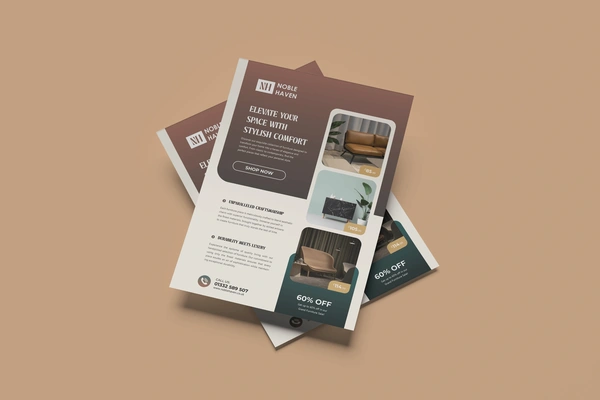
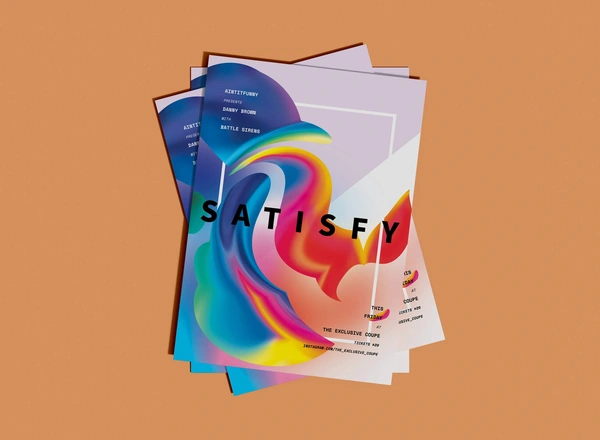
If you are distributing leaflets that will be carried, stacked, or placed quickly, keep readability and tactile durability in mind. For the fastest path, start with proven templates, then refine your specific content.
Don’t ignore artwork specs, they protect conversions
Even a great design can underperform if it’s not print-ready. Small errors, like missing bleed or text too close to the edge, can cause cropping or uneven margins that reduce trust.
When we help with artwork preparation, we focus on:
- Bleed and safe margins (so important text and logos stay inside the safe area)
- Template alignment (especially for folds or special formats)
- Image resolution and sharpness (to keep headlines and QR codes crisp)
For example, Printlogik’s uncoated flyers specify 300dpi and 3mm bleed, and other flyer styles include artwork guidelines and safe margin recommendations. Following these details protects how your CTA looks at the moment someone decides whether to act.
If you want to simplify the process, browse the flyer and leaflet range and use the available templates as a starting point: flyers and leaflets collection with templates.
When you need it, use a professional flyer design service
If time is tight, or your copy needs restructuring for clarity, we recommend using a design service. The goal is not just “pretty artwork”, it is print-ready files that preserve your conversion intent.
Printlogik offers a Flyers Design Service for £55, with a workflow that moves from concept through to print-ready files. If you want a faster route from draft to finished flyer, this kind of service can remove avoidable back-and-forth and help you launch confidently.
Did You Know?
Multichannel campaigns that combine print flyers with digital ads achieve 60% higher response rates than standalone digital strategies.
Scale your conversion results with print-and-digital consistency
Even the best How to design a flyer that converts approach will underperform if the landing step is mismatched. In 2026, we treat the flyer as part of an integrated customer journey, not a standalone piece.
To keep conversion consistent, do the following:
- Match wording between the flyer headline and the landing page heading.
- Match brand colour and imagery so the reader recognizes it as “the same offer”.
- Make the next step frictionless, for example a short form or a clearly scheduled booking option.
- Test one variable at a time, such as headline wording or CTA placement.
If your campaign includes both flyers and posters for visibility, keep design consistency across formats. Posters are a natural complement when the flyer acts as a take-home action prompt, while the poster supports discovery in the local area.
You can explore poster options here: posters category. For example, indoor posters are designed for local promotion with cost-effective setups, and outdoor posters focus on durability for high-impact locations.
Finishing touches that support conversion
Design conversion is usually won in the details. In 2026, we still see the same issues: weak contrast, cluttered layouts, and CTAs that are hard to read.
Use this conversion-focused checklist before you send artwork to print:
- Headline readable at arm’s length (not only on a screen).
- Benefits are written, not implied (3 to 5 bullets).
- CTA is the biggest “action” element on the flyer.
- Key details are grouped (so the reader doesn’t hunt).
- Brand colour is used consistently, especially on the CTA.
- Proof of credibility is short (one or two lines or a small number).
If your flyer includes special shapes or features, use the relevant artwork guidance. For instance, rounded corner flyers include design tips and artwork guidelines, including bleed and safe margin considerations that protect your final look: rounded corner flyers with artwork guidelines.
Conclusion
How to design a flyer that converts comes down to clarity, scanning speed, and a CTA that makes the next step simple. In 2026, physical flyers still earn attention fast, and the brands that win are the ones that pair strong messaging with print-ready execution.
We recommend using proven formats, writing benefit-led copy, matching your flyer to your next step, and following Printlogik’s templates and artwork guidance to protect readability and layout. If you want help bringing your flyer from draft to print-ready, start with Printlogik’s flyers design service, or explore the flyer range at Printlogik.
Frequently Asked Questions
How to design a flyer that converts for a local business in 2026?
How to design a flyer that converts starts with one offer and one clear CTA, placed where readers can find it immediately. Use short benefit bullets, readable contrast, and print-ready artwork so your flyer looks sharp in real-world lighting. If you include a QR code, add a short instruction like “Scan to book” so it’s obvious what to do next.
Should we use a QR code on a flyer in 2026?
Yes, if your CTA needs a fast next step, a QR code can increase engagement because it reduces friction. How to design a flyer that converts with QR codes means keeping the code large enough, printed with high clarity, and pairing it with a micro-instruction. Also ensure the landing page matches the flyer headline.
What size should our flyer be to maximise responses?
The best size depends on how much information you need and where the flyer will be placed. For quick take-home offers, sizes like DL or A7 can work well, while more detail may justify A5 or A4. How to design a flyer that converts in terms of size means designing the content for scanning, not cramming.
Is it worth paying for a flyer design service?
If your message is complex, your branding needs refinement, or you do not have time to produce print-ready artwork, a design service can be worth it. Printlogik’s Flyers Design Service is priced at £55, and focuses on preparing flyer artwork ready for print. How to design a flyer that converts becomes easier when the final file matches the printer’s specs.
What paper type helps a flyer look more premium in 2026?
How to design a flyer that converts includes matching paper to your audience and environment, not just your taste. Uncoated flyers offer a natural look and can be written on, while classic flyer stocks support strong presentation for general promotions. If you want to signal sustainability, recycled flyers can support that message without sacrificing print quality.
How do we avoid flyer design mistakes that reduce conversions?
Most conversion-killing mistakes are formatting and readability issues, like text too close to the edge or low-quality images. How to design a flyer that converts means following bleed and safe margin guidance, using templates correctly, and keeping the CTA visually dominant. Proofread for clarity, then do a final check for contrast and spacing.