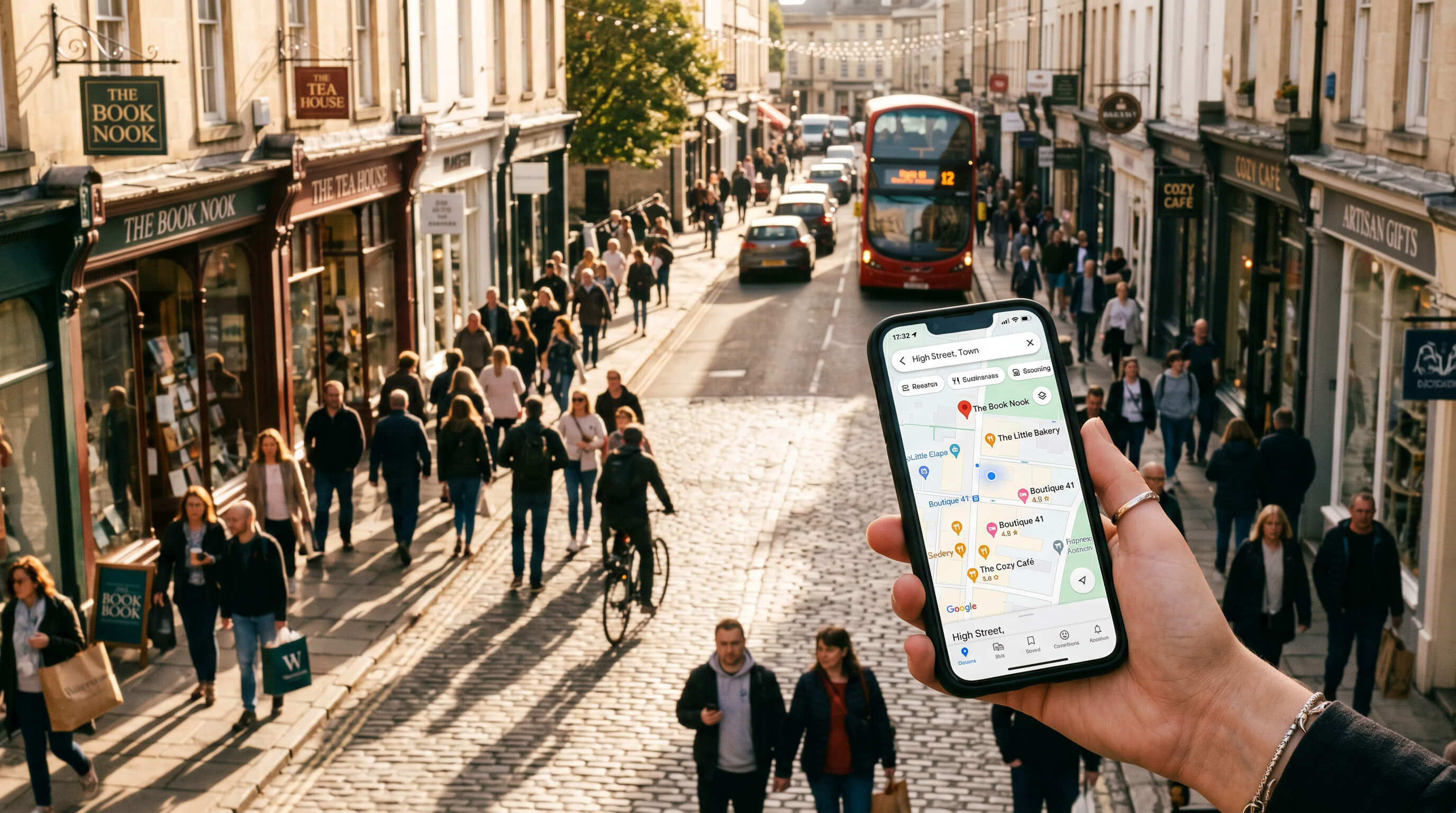
Local search visibility delivers customers who've already decided to buy. Paid ads merely interrupt people who might be persuaded. For businesses operating within a 20-mile radius, it's the only lead channel worth prioritising long-term.
The difference is intent.
When someone searches "printers Derby" or "accountant near me", they're solving an immediate problem. They're not browsing. The search itself is the buying signal. They've decided they need the service. Now they're choosing who provides it.
Paid ads put you at the top of results faster. That sounds like a shortcut. It isn't. Because the person clicking your ad hasn't arrived at their decision yet. You're interrupting them with an offer. Organic local search catches them when the decision's already made.
The Cost Difference Is Real
A Google Ads campaign targeting Derby-based customers costs you every time someone clicks. Whether they buy or not. Whether they were serious or just comparing prices. Whether they even read past the headline.
That's the model. You pay for attention. Not outcomes.
Local SEO costs time. Not money per click. You build your Google Business Profile, keep it updated, collect reviews, write content that answers the questions people actually search. The work compounds. Your listing doesn't vanish the moment you stop spending.
A customer came in last week with exactly this problem. They'd spent £800 on Google Ads over three months. Seventeen clicks. Two enquiries. Zero sales. Their Google Business Profile hadn't been touched in a year. No photos. Three reviews. Opening hours wrong.
The traffic they needed was already searching for them. They just weren't visible where it mattered.
High-Intent Traffic Doesn't Need Persuading
Most marketing optimises for persuasion. Get attention. Build interest. Overcome objections. Close the sale.
Local SEO skips all of that.
Someone searching "emergency plumber Nottingham" at 11pm doesn't need persuading. They need a plumber. Now. The business that shows up first with a phone number, reviews, and availability wins. Not because their ad copy is sharper. Because they're there when it counts.
Paid ads work when you're solving a problem people don't know they have yet. Local SEO works when they know exactly what they need and they're choosing who to call.
That's why organic listings convert higher. The intent is already there. You're not creating demand. You're capturing it.
Geographic Precision Without Geographic Waste
Google Ads lets you target by postcode. Sounds precise. In practice, you're still paying for clicks from people outside your service area who happened to search a broad term. Or competitors checking your pricing. Or someone in Derby who wants Derby, Connecticut.
Your Google Business Profile only shows to people searching near your actual location. Or people who include your town in the search. That's not targeting. That's reality filtering the traffic for you.
No wasted spend on irrelevant clicks. No budget disappearing into bid wars with national chains who can afford to lose money per click because they're playing volume. You show up where you operate. That's it.
Reviews Do More Work Than Ad Copy Ever Could
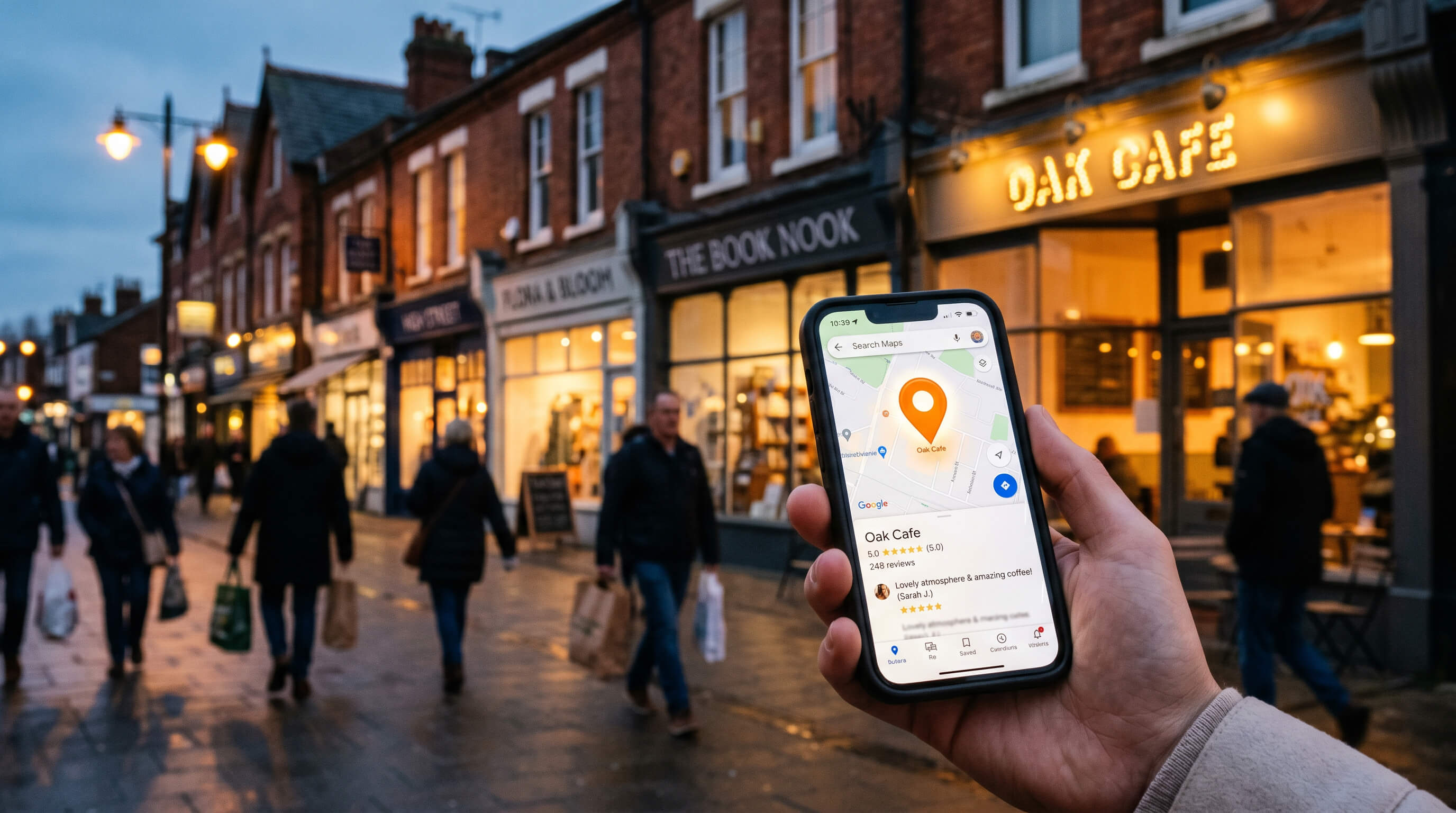
Paid ads let you write three lines of text and hope it lands. Local SEO puts your reviews, your photos, your hours, and your phone number in front of someone who's already searching.
People trust reviews. They don't trust ads. Watch how people use Google. Reviews get read. Ads get skimmed.
When someone sees your listing with 47 five-star reviews and updated photos of your work, they're choosing you before they've even clicked. The decision's made. They're just confirming you exist.
Compare that to an ad. Same business. Same offer. But no reviews visible. No proof. Just a line of text competing with three other ads saying roughly the same thing. You're starting from zero trust.
Local SEO front-loads the credibility. Paid ads make you earn it after the click. By which point most people have already bounced.
The Compound Effect Nobody Talks About
Paid ads stop working the moment you stop paying. Your visibility resets to zero. All that spend bought you temporary positioning. Nothing compounds. Nothing sticks.
Local SEO builds on itself. Every review you collect makes the next customer more likely to choose you. Every photo you add strengthens your listing. Every update signals to Google that you're active. Your ranking improves because the work accumulates.
A business that invests six months into local SEO doesn't just rank higher. It becomes harder to displace. Your competitors can't outspend you into irrelevance because money doesn't buy organic rankings. Consistency does. Relevance does. Proof does.
That's the model most small businesses miss. They see paid ads as the fast option. It is. But fast and effective aren't the same thing. You're renting visibility. Local SEO owns it.
Where Paid Ads Still Make Sense
This isn't about never using paid ads. It's about knowing when they're the right tool.
If you're launching a new service and nobody's searching for it yet, paid ads create awareness. If you're running a time-limited offer and you need reach right now, ads deliver. If your market is national or online-first, organic visibility takes too long to build.
But for a business serving a 20-mile radius, where people are already searching for what you do, paid ads are the expensive way to solve a problem local SEO handles better.
You don't need a bigger budget. You need to be visible where people are already looking.
What Local SEO Actually Requires
It's not complicated. It's consistent.
Keep your Google Business Profile updated. Post photos of recent work. Respond to reviews within 24 hours. Answer the questions people ask in your Q&A section. Write your business description like you're explaining what you do to a customer who walked in. Not like you're trying to game an algorithm.
If you're a print business, show the finished work. If you're a plumber, show the job site. If you're a café, show the food. People search with intent. They convert when they see proof you deliver.
That's the whole strategy. Be accurate. Be active. Be real. The ranking follows.
And if you're running flyers or business cards to support that local visibility, make sure they point to the same phone number and address on your profile. Consistency across channels is what Google rewards. Mismatched details are what kills trust.
The Pattern
Most businesses assume the fastest route to customers is the paid route. It isn't. The fastest route is being visible where people are already searching with intent to buy.
Paid ads interrupt. Local SEO intercepts. One costs you per click. The other costs you time upfront and compounds from there. For a local business, that's not a trade-off. It's the only model that makes sense long-term.
If you're spending money on Google Ads and your local SEO is neglected, you're solving the wrong problem. Fix the organic visibility first. The customers are already looking for you. You just need to be where they're searching.