
In 2026, one of the most common causes of costly reprints is not the design itself, it is preventable mismatches between your file specifications and the actual print dimensions you need.
Key Takeaways
- What is large format printing means producing printed graphics at sizes that standard printers often cannot handle, typically for signage, events, and retail environments.
- Large format print covers formats such as roller banners, poster paper and PVC banners, plus outdoor-friendly materials.
- In 2026, buyers expect reliable production workflows, so “print-ready” artwork checks are a key quality control step.
- Choosing the right material (for example, 200gsm poster paper versus 440gsm PVC) directly affects durability, curl resistance, and outdoor performance.
- To reduce waste, teams must confirm dimensions, bleed, and finishing requirements before we print large format jobs.
- Large format printing works best when you match the print method to the use case, indoors or outdoors, temporary or long-lasting.
When you are planning a print run and want consistent results, you can start by exploring the range at Printlogik for signs, banners, and displays, then narrow down by product and material.
What is large format printing, in plain terms?
What is large format printing in the simplest sense is the production of large-scale printed graphics for real-world visibility. The goal is straightforward: your message, branding, or information needs to be readable at a distance, often in high-traffic or outdoor environments.
In 2026, large format printing is commonly used for:
- Exhibition and event signage (fast setup, high visual impact)
- Retail promotions and in-store displays (clear messaging near the point of decision)
- Outdoor advertising (weather-resistant materials and finishes)
- Workplace and visitor graphics (directional and informational print)
On our side, we treat large format printing as more than “printing something big.” We plan it as a complete job, from file checks to the material selection that fits where the print will be used.
Where you will see large format printing used most often
Most people encounter large format printing when they attend an event, walk into a showroom, or notice outdoor branding. Because the print must perform in the environment, the use case often determines the print format, thickness, and finishing method.
From our large-format product range, you can see how common applications map to different print formats and materials:
- Roller and pull-up banners for exhibitions and retail counters (quick deployment, tidy storage)
- Poster paper prints for indoor posters and short-term campaigns
- PVC banners for outdoor or weather-exposed placements
To browse the types of products that fit these real-world needs, we recommend starting with our category pages such as Signs, banners and displays and Roller and pull-up banners.
Large format printing materials: why “paper vs PVC vs mesh” changes everything
When you ask what is large format printing, the answer becomes more useful when you add one more detail, the material. In 2026, the material choice is often the difference between a print that looks sharp for the full campaign and one that curls, fades, or struggles outdoors.
Here are three materials that frequently appear in large format signage and banner jobs, and what they typically mean for your outcome:
- 200gsm poster paper for indoor posters and campaign graphics where you want a clean printed finish and a reliable feel for display.
- 440gsm PVC for tough, weatherproof banner work, especially when the piece may face outdoor conditions.
- Air-mesh polyester (often used for flexible outdoor banner-style applications where airflow through the mesh can be beneficial).
If you are deciding between options, it helps to match the material to the environment first, then pick the print format second. That is how we keep large format printing practical, not theoretical.
Common large format printing formats (and what they are designed to do)
Large format printing is not one single product. It is a family of formats, each designed for speed, placement, and viewing distance. Below are some typical formats you will recognize from events and marketing spaces.
- Roller banners and pull-up banners, designed for quick setup and easy transport. These are popular where you need consistent branding across multiple appearances.
- Wide-format roll banners for larger visuals, used when the message needs to fill more of the available wall or booth space.
- Poster prints on heavier paper options when the use is primarily indoor.
- PVC banners for outdoor or weather-exposed placements where sturdiness matters.
And because large format printing is often tied to campaigns, the production workflow matters. A print job rarely becomes “real” until the file is approved and ready to run.
Did You Know?
Large-format production practice means turnaround timing typically starts only after artwork/file approval, because the job becomes “print-ready” at that stage.
Source: Printing Shark
Large format printing quality control: file specs, dimensions, and finishing details
In practice, what is large format printing also includes how we prevent errors. Large-format work is more sensitive to spec and layout than small-format printing because scale affects everything, from text legibility to trimming accuracy.
A common root cause of failure is a simple mismatch: the file dimensions or specification do not match the intended output size. This is why large format printing mistake prevention focuses on verifying that the file specifications and the print dimensions align before production.
We handle quality control with a clear workflow mindset, and we keep it human. We conduct a free human artwork check on every order, meaning a real person reviews every order before it goes to print.
This approach supports smoother large format printing across campaigns, not just one-off jobs. It helps ensure your message prints correctly the first time, with the scale you planned.
Examples of large format printing products we manufacture
To make the concept real, it helps to look at how large format printing shows up as specific products. Below are examples of items from our range that are commonly used for signage and banner-style communication.
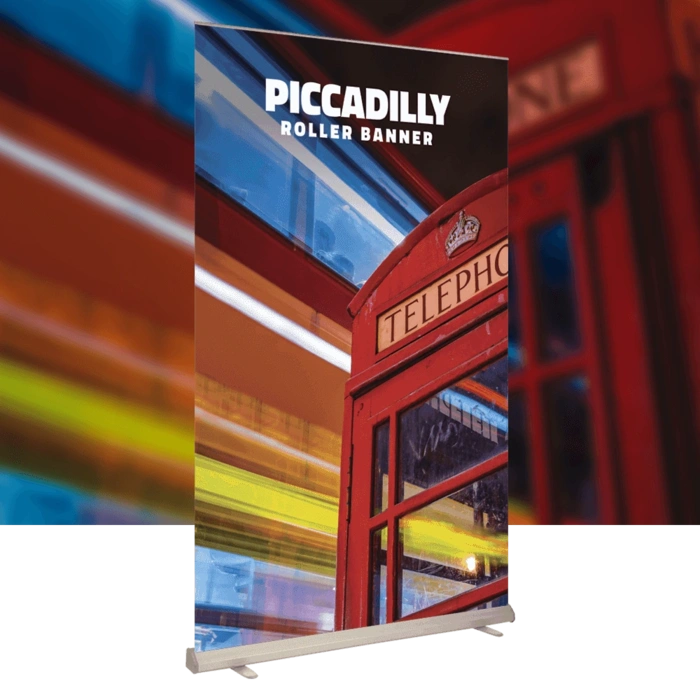
1) Super Wide Roller Banner
This format is built for larger visuals and higher booth visibility, ideal when you need your branding to dominate the space. For environments where you will travel, set up quickly, and repeat the same campaign, roller banner style output is often the practical choice.
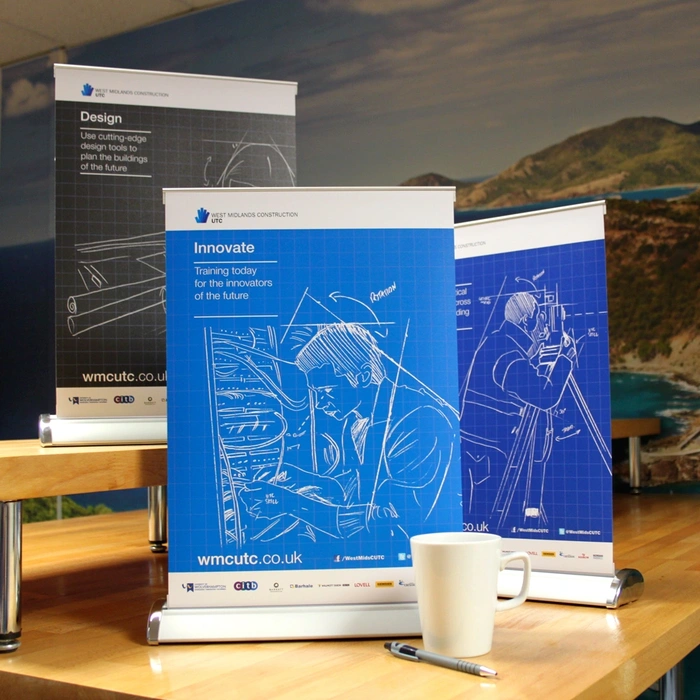
2) Desktop Roller Banner
If your message is intended for sales desks and close-up point-of-purchase environments, the desktop format supports clear communication without taking over the whole floor area.
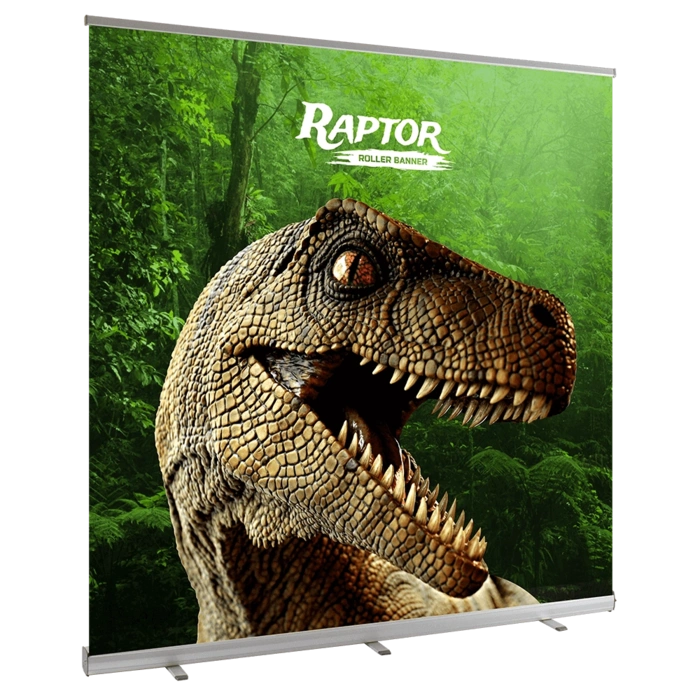
3) Budget Roller Banner
This option is designed as a professional pull-up banner for exhibitions, retail, and events. It is described as having a 400gsm anti-curl SoFlat graphic, and it is available up to 2m wide.
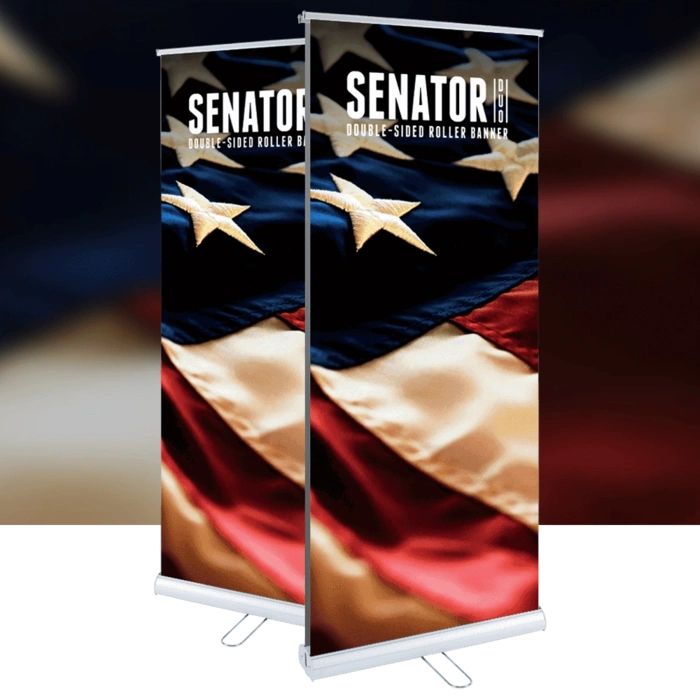
4) Double-Sided Roller Banner
When viewers might approach from more than one side, a double-sided configuration helps you keep the messaging consistent without re-positioning the banner.
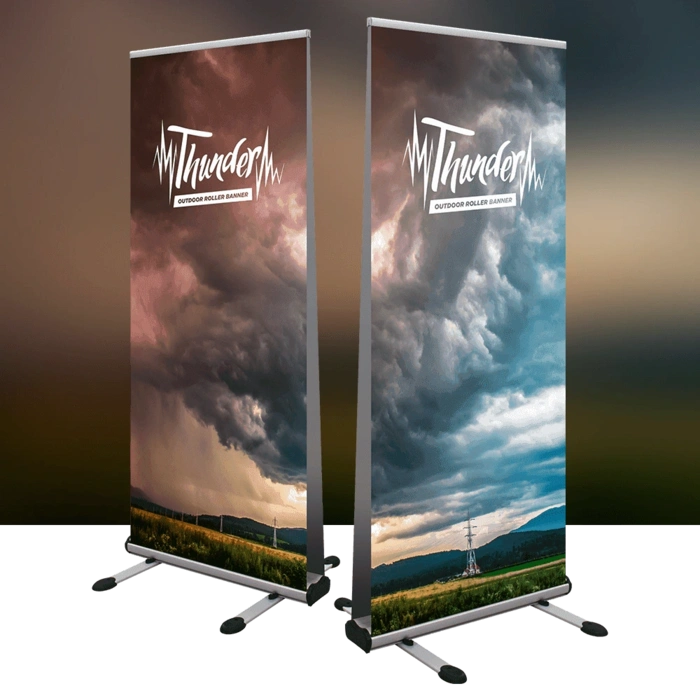
5) 440gsm PVC banners
For outdoor durability, 440gsm PVC banners are described as tough and weatherproof, with the additional note that you can choose any size and expect same-day dispatch available across the UK.
Note: the above examples show product intent and practical use cases. When you are choosing what is large format printing for your needs in 2026, we recommend starting with the display location first, then selecting the format.
Large format printing in 2026: what is changing in how teams plan campaigns
In 2026, what is large format printing often comes down to planning and operational reliability. Larger buyers increasingly treat signage and banner production as a predictable workflow, not a last-minute purchase.
At the same time, there is growing emphasis on environmental considerations, alongside changing customer expectations. Industry surveys in the print and display markets have highlighted how evolving demands are shaping how printers operate, including environmental handling.
Did You Know?
A large-scale survey in print and sign/display markets shows evolving customer demands are changing printer operations, including environmental considerations.
Source: Large Format Review
How to plan your large format printing job (so it arrives right)
When people ask what is large format printing, they often want the practical next step, what should they do to get a job made correctly. Planning is where large format printing becomes predictable.
Here is a straightforward, buyer-friendly checklist we follow conceptually for large format printing jobs in 2026.
- Confirm the display location, indoor or outdoor, and the viewing distance you need.
- Choose the format that matches the environment, such as roller banners for travel and pull-up needs.
- Select the material that fits the conditions, for example, 200gsm poster paper for indoor campaigns, or 440gsm PVC for weather exposure.
- Verify your dimensions and file specs before production begins.
- Plan your timeline around artwork approval, because turnaround starts once the job is print-ready.
- Decide on finishing and accessories that complete the setup for real use.
For example, if you are building a consistent event kit, you may want the same visual language across multiple display points. In that case, we can help you think about the series, not just a single banner.
If you need help comparing material intent, you can also review our material pages such as 200gsm poster paper and 440gsm PVC.
Beyond printing: how we support the full signage journey
Large format printing can be a standalone service, but buyers often benefit from support around the campaign lifecycle. We take an operational approach, and we also support teams that need branded assets alongside the final printed output.
From a services perspective, our offering includes operational capabilities such as:
- Bespoke Quotes for jobs that do not fit a standard template.
- Drop Shipping where distribution is part of the requirement.
- Order Consolidation for teams managing multiple display points.
- PrintPass as part of how we handle production workflows.
We also position sustainability as a measurable initiative through our Print a Tree programme. Every order contributes to global reforestation, with tracked impact metrics shown such as CO2e reduction and trees planted.
And because accessibility matters in 2026, we also promote web accessibility tooling through Actwidget, which uses AI and machine learning to automate accessibility checks and helps invite more users to engage with your content.
That matters because large format printing and digital content are often connected in campaigns. For QR-enabled signage and event communications, you want the printed piece to lead to a landing experience that works for more people.
Conclusion
What is large format printing? It is the production of oversized, high-visibility print designed for real environments, from exhibition roller banners to weatherproof PVC signage. In 2026, teams plan large format printing with stronger emphasis on file accuracy, artwork approval workflows, and material selection, because these choices directly affect quality, timing, and repeatability.
If you are ready to move from “what is large format printing” to a specific job, start with Printlogik’s large-format signage and banner range, then choose the format and material that match where your print will be seen.
Frequently Asked Questions
What is large format printing used for in 2026?
What is large format printing used for in 2026? It is used for signage, banners, and big visibility graphics like roller banners, outdoor PVC banners, and poster-style campaign prints where readability from a distance matters. Teams use it for events, retail promotions, and outdoor branding.
What materials are best for large format printing for outdoor signage?
For outdoor signage, large format printing typically favours tougher, weather-resistant materials. For example, 440gsm PVC banners are specifically described as tough and weatherproof, making them a strong fit when durability is required.
Is large format printing worth it for short campaigns?
Yes, large format printing can still be worth it for short campaigns when the message needs strong visibility and professional presentation. In 2026, the key is matching the format and material to the environment, and ensuring your file specs align so you avoid reprints.
How do I avoid mistakes when I order large format printing?
To avoid mistakes in large format printing, verify dimensions, bleed, and layout specs before production. A common driver of costly errors is a mismatch between file specifications and the required print size, so a human artwork check before printing helps reduce risk.
How long does large format printing take once my artwork is approved?
Turnaround timing in large format printing typically starts only after artwork/file approval, because the job becomes “print-ready” at that point. If you need a tight schedule in 2026, plan for the approval stage as part of the production timeline.
Can large format printing include QR codes and still work well?
Large format printing can include QR codes, and it is often used to link printed signage to digital information. In 2026, survey data indicates that when people scan QR codes, it can increase reported product understanding, which supports using QR-enabled signage for clearer messaging.